Why You Shouldn't Be Indifferent to Strangers?
Why indifference to others' thinking destroys civilization: the truth about how your beliefs affect the entire world.

Why You Shouldn’t Be Indifferent to Strangers?
In a world where individualism is often raised to an absolute and the “every man for himself” principle seems natural, a logical question arises: should we even care what other people think? Do we have the right to judge others’ beliefs, criticize irrational decisions, or interfere in the thought processes of those around us?
The Boundless Playing Field of Humanity
Eliezer Yudkowsky suggests viewing human civilization as a “boundless playing field,” where we are all players, whether we realize it or not. In this metaphor, every decision, every thought, every belief affects not only the individual but also the developmental trajectory of all humanity.
When someone buys a lottery ticket, believing in the mathematically impossible; when a person turns away from scientific facts in favor of convenient delusions; when people make decisions based on emotions rather than rational analysis — all of this makes “the story of humanity a little darker.” Every moment of irrationality is a missed opportunity for progress, for a better understanding of the world, for wiser decisions.
The Difference Between Condemning Ideas and Burning People
It is crucial to understand the fundamental difference between criticizing ideas and committing violence against their bearers. History is full of examples of people being “burned to death because some priest decided they were thinking the wrong way.” But refusing to critique wrong ideas for fear of repeating these mistakes is another, no less dangerous, extreme.
Yudkowsky proposes a simple principle: “Let’s argue against bad ideas, but let’s not burn their bearers.” The syllogism should be: “I think this person said something wrong, therefore I will speak out against their words, but I will not burn them or stop their speech with violence.”
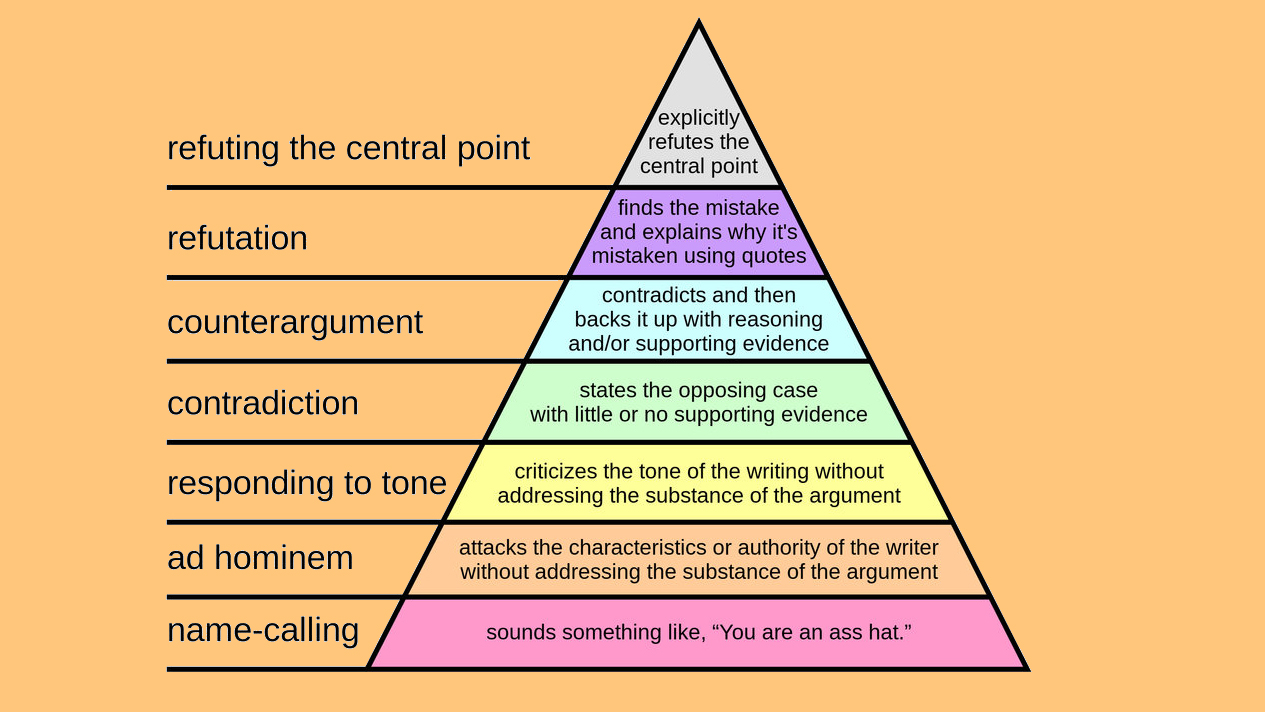
This is one of the key principles of rationality: factual disagreements should be resolved through experiments, mathematics, and honest debate, not through violence and prohibition. You should win by persuading people, not by “destroying” your opponents.
Emotions vs. Care: Why We Confuse Feelings with Values
Many people claim they only care about their close friends and family. But psychologist Nate Soares points out an important distinction between strong emotions and genuine care.
We experience more intense feelings for those who are close to us—that’s natural. But this doesn’t mean we can’t care about strangers. Courage is not the absence of fear, but the ability to do the right thing despite fear. Similarly, care is not being overwhelmed with emotion, but the willingness to act correctly even when there is no emotional impulse.
Evolutionary Traps of Our Thinking
Why is it so difficult for us to care about strangers? The answer lies in our evolutionary heritage. Our brain evolved in small tribal groups where it was critical to distinguish between “us” and “them.” These ancient mechanisms still influence us, causing us to see other people as potential competitors, allies, or enemies.
Interestingly, we often feel more empathy for suffering animals than for people. Why? Because animals don’t trigger our social mechanisms for recognizing threats and competition. We see them as innocent beings, not potential manipulators.
Viewing People as “Innocent Animals”
One way to overcome these evolutionary biases is to try to see people as they truly are: not as cunning schemers, but as “innocent animals, marveling as they explore a surrounding world they can never fully comprehend.”
Imagine people as apes trying their best to adapt to a complex civilization, radically different from the ancient savannas where their minds were formed. Or as angels who have never been to paradise but still retain a divine spark.
Such a perspective helps to remove the impulse to see competitors in others and to start treating them with the same empathy we have for kittens or puppies.
The Inner Conflict Between Feelings and Values
Reflective beings, such as humans, are capable of analyzing their feelings and choosing which ones to follow. By paying attention to our internal contradictions, we can discover a conflict between our emotional reactions and our deep-seated values.
On one hand, we have tribal instincts that make us care more about those who are close and less about those who are distant. On the other hand, we have a sense of justice, aesthetics, and ethics that suggests all people have equal value.
Resolving this conflict is a matter of personal choice. But it is important to remember that our emotions are not the final verdict on what is right, but merely one factor in making a decision.
Practical Consequences of Caring About Others’ Minds
Caring about how other people think has very practical consequences:
Collective Decisions: In a democratic society, citizens’ irrational beliefs directly affect policy decisions that impact all of us.
Scientific Progress: The spread of pseudoscientific views slows the advancement of knowledge and can lead to dangerous consequences (as the COVID-19 pandemic showed).
Economic Decisions: Mass irrational economic decisions (like financial bubbles) affect the well-being of millions of people.
Environmental Problems: Denial of climate change or other environmental threats can have catastrophic consequences for future generations.
How to Care Without Becoming a Tyrant
Acknowledging that others’ beliefs affect us does not mean we should become the thought police. There are ethical ways to influence the thinking of others:
- Education: Providing high-quality, accessible information.
- Personal Example: Demonstrating rational thinking in one’s own life.
- Open Dialogue: Honest discussions without trying to “break” the other person.
- Creating Conditions: Fostering an environment that encourages critical thinking.
Care as a Choice, Not an Imposition
Ultimately, caring about how other people think is a conscious choice based on an understanding of our interdependence. We can choose narrow selfishness, caring only for ourselves and our loved ones. Or we can expand our circle of care, recognizing that in the modern world, the fates of all people are intertwined.
This choice does not have to be dictated by emotion. A rational understanding that, in the long run, a society of more rational and wise people will be better for us too is sufficient.
Conclusion
The question of whether we should care what others think has no simple answer. But understanding that we are all playing the same game on the same field, that our thoughts and decisions affect the common trajectory of humanity, makes this question more significant.
We can choose care — not as an emotional reaction, but as a rational position. We can learn to see in other people not competitors or enemies, but fellow minds who, like us, are trying to make sense of a complex world.
And most importantly, we can do this without forgetting the importance of freedom of thought and without turning into those who “burn people for wrong thoughts.” Criticizing ideas and caring for people are not only compatible things but also necessary elements of a healthy society.
Related Topics
Rationality
About stereotypes regarding rational individuals and what rationality truly entails.
Discrimination
What does genetics say about human unity? The biological basis of human diversity: Why discrimination has no scientific justification.

Problem list of Modern Society
A large and comprehensive catalog of systemic problems in modern society.