How to Change (Teach) People?
A guide to andragogy with key methods for effective learning.
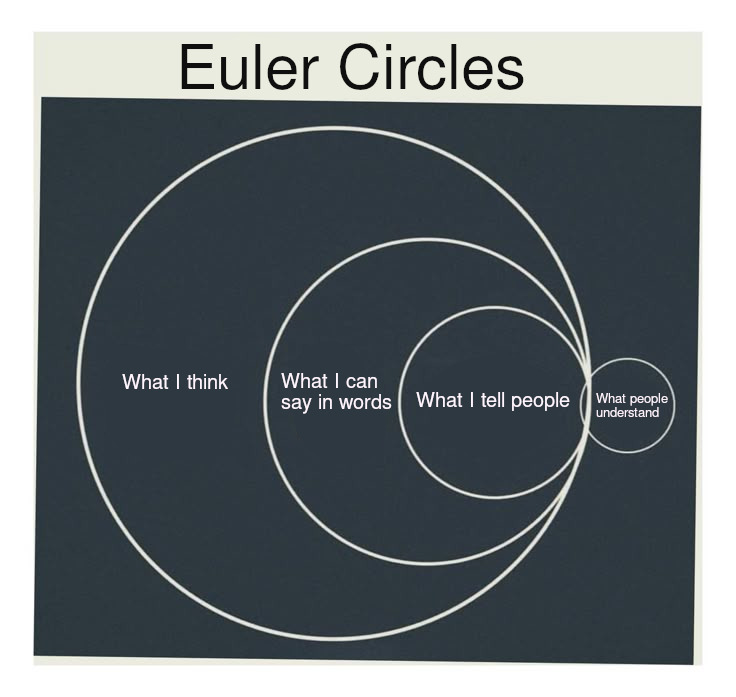
How to Most Effectively Teach and Change People?
In a world where knowledge becomes obsolete faster than we can absorb it, the ability to learn and adapt effectively is the ultimate survival skill. However, our approaches to learning often remain archaic and inefficient. We try to “cram” knowledge into heads as if they were empty containers, and then we’re surprised when nothing works. The problem lies deeper than it seems — in the very architecture of our thinking.
Problem #1: The Conceptual Distance Gap
Imagine you’re trying to explain the concept of blockchain to your grandmother. You start with “decentralized ledger,” see the blank look in her eyes, take a step back to “digital signature,” then to “database”… and you fail. The problem isn’t that your grandmother is incapable of understanding. The problem is that between your knowledge and her current understanding lies a gap of tens, or even hundreds, of conceptual steps.
Our brains evolved in tribes of hunter-gatherers, where all fundamental knowledge was shared and concrete. If you found an oasis, you didn’t need to explain to your fellow tribespeople what water, thirst, or walking was. The conceptual distance between people was minimal — one, maybe two logical steps at most.
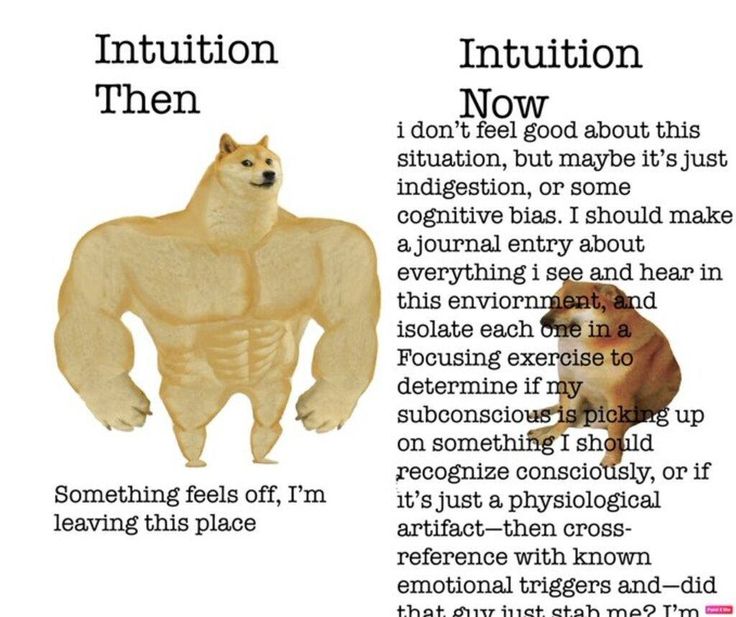
Today, we live in a world of abstractions, where the conclusions of scientific theories are hundreds of inferences away from everyday experience. But our psyche still expects everything to be understood intuitively, in a single step. This creates two illusions:
-
The Expert’s Illusion: A scientist who has mastered their field over 20 years genuinely believes their knowledge is “simple and obvious.” They have forgotten the thousands of steps they took and now try to make a novice leap across the chasm.
-
The Novice’s Illusion: A student, faced with something incomprehensible, decides “this isn’t for me” or “the lecturer is boring,” not realizing they lack the fundamental “stepping stones.”
This gap is the main reason for communication failures in education, science, and business.
Problem #2: Cognitive Overload and Resistance to Change
Our brain is lazy and energy-efficient. Thinking is the most costly process for the body. Therefore, the brain does everything it can to automate behavior by creating stable neural pathways — habits and beliefs. Any new information that contradicts the existing worldview is perceived as a threat.
To accept something new, the brain doesn’t just need to add a file; it needs to rebuild an entire network of neural connections, spending a huge amount of energy. This causes cognitive dissonance and subconscious resistance. We don’t just “not understand”; we actively don’t want to understand because it’s painful and energy-intensive.
The Solution: The Engineering Approach to Learning
Effective learning is not an art or magic. It is engineering. We must stop blaming the student (“lazy,” “incapable”) or ourselves (“a bad teacher”) and start designing the learning process based on how our brain actually works.
The Fresco Principle: Change the Environment, Not the Person
Jacque Fresco brilliantly formulated the cardinal rule: You cannot change a person directly — you can only change the environment that shapes their behavior.
The environment is not just the physical space. It’s the informational, social, and emotional architecture in which we place a person.
-
Don’t fight laziness — create an environment where the next step is obvious and provides a small dose of dopamine (the joy of success).
-
Don’t call for generosity — create conditions of abundance and safety where sharing becomes natural.
-
Don’t punish for mistakes — create a “sandbox” where mistakes are a cheap and safe way to get feedback from reality.
Change the conditions, and new behavior will become the inevitable result of adaptation.
The Architecture of Effective Learning: Key Principles
An effective learning program is not a collection of facts, but a carefully constructed route for the student’s mind.
1. Lay a Conceptual Path: The “Scaffolding” Principle
Every new piece of knowledge must build on what the audience already accepts and understands. Don’t start with conclusions. Start with axioms everyone agrees on, and lead them step-by-step to the complex idea. As soon as you skip a step, the chain breaks, and to the listener, you transform from an expert into a cultist. Create “scaffolding” — temporary supports that help the learner reach the next level, which can later be removed.
2. Manage Motivation: From “Have To” to “Want To”
Schools teach us to solve problems but don’t explain WHY it’s necessary. Without understanding its practical value, knowledge becomes dead weight. Motivation is biochemistry.
-
“Have to” is stress, cortisol. The brain operates in survival mode, remembering information just long enough to pass an exam and then immediately forgetting it.
-
“Want to” is anticipation, dopamine. When a student sees how new knowledge will solve their problem or make their life better, they start seeking information themselves.
Always answer the question: “How will this help me here and now?“
3. Make Knowledge Tangible: The Power of Visualization and Stories
Our brain thinks not in abstractions, but in images, stories, and analogies.
-
Abstraction: “Portfolio diversification reduces unsystematic risks.” (Only understandable to those already in the know).
-
Image/Analogy: “Don’t put all your eggs in one basket. If it falls, you lose everything. Spread them across different baskets.” (Understandable to everyone).
Use diagrams, models, simulations, and most importantly, tell stories. A story is the brain’s natural way of packaging cause-and-effect relationships.
4. From Morality to Mechanics: The Principle of Consequences
Morality is subjective and often invites rejection. Mechanics are objective and persuasive.
-
Morality: “Stealing is wrong.” (Why? Who says?)
-
Mechanics: “When you steal, you destroy trust in the system. The system becomes more expensive and slower for everyone, including you. Here’s a model that shows this…”
Explain not what is “good” or “bad,” but how a system works and what inevitable consequences a particular action leads to.
5. Develop Metacognition: Teach How to Learn, Not What to Memorize
The world is changing so fast that specific knowledge becomes outdated. The only durable skill is metacognition, or the ability to learn. Instead of giving ready-made answers, teach how to ask the right questions:
- “What are the fundamental principles of this system?”
- “Where are my blind spots?”
- “How can I verify this claim?”
A conclusion reached independently is a hundred times more valuable than a memorized fact.
6. Use Social Gravity: Learning in a Group
We are social creatures. Learning alone is often ineffective.
-
Explaining to others: The best way to understand something is to try to explain it to another person (the Feynman Technique).
-
Group dynamics: Solving problems together creates a shared context and motivation that is difficult to achieve alone.
-
Feedback: An environment where you can safely share ideas and receive constructive criticism accelerates learning exponentially.
Practical Takeaways
For Teachers and Leaders:
- Diagnose the starting point. Find out what your audience already knows and believes. Start from there.
- Build conceptual bridges. Break down complex material into the smallest possible steps. Ten small steps are better than one giant leap.
- Create “sandboxes.” Design tasks where it’s safe to make mistakes and experiment.
- Sell the “Why?”. Spend up to 30% of your time explaining how this knowledge will change your students’ lives for the better.
For Learners:
- Become a cartographer. Actively look for connections between new knowledge and what you already know. Draw mind maps.
- Ask “Why?” and “How?”. Don’t accept anything on faith until you understand the logic and applicability.
- Apply it immediately. Form a sentence with a new term. Try to solve a simple problem using the new method. Knowledge only becomes yours after you use it.
For the Education System:
- Focus on thinking, not content. The goal should be to teach methods of working with information, not just facts.
- Design the environment. The architecture of classrooms, schedules, and online platforms should all be geared towards reducing cognitive load and increasing motivation.
- Project-based learning. Replace passive lectures with solving real, interdisciplinary problems.
Conclusion
Effective teaching and change are not about transmitting information, but about creating the conditions for transformation. We cannot change a person directly, but we can become architects of an environment in which they will change themselves — naturally, organically, and with pleasure.
Remember: a chasm lies between the expert and the novice. Your job is not to shout from the other side, but to patiently build a sturdy bridge, stone by stone, until the other person can safely cross over to your side. This is the true art of teaching.
Related Topics
What is the brain and how do you use it?
About the processes that occur in the brain during thinking and learning, how our actions influence its development, how to control it, etc.

Rationality
About stereotypes regarding rational individuals and what rationality truly entails.

Why You Shouldn't Be Indifferent to Strangers?
Why indifference to others' thinking destroys civilization: the truth about how your beliefs affect the entire world.