Resistance to science
An analysis of how society has resisted science and innovation throughout human history.

When Truth Meets Resistance: The History of Scientific Discoveries’ Struggle for Recognition
The history of science is not only the triumph of human reason but also a chronicle of stubborn resistance to new ideas. Paradoxically, many revolutionary discoveries that seem obvious today encountered fierce opposition from contemporaries, including the most authoritative scientists of their time.
Anatomy as Blasphemy
Long before the great astronomical debates, humanity resisted attempts to understand its own body. In the Middle Ages, anatomical studies were practically forbidden. Andreas Vesalius, the founder of modern anatomy, in the 16th century risked his life by secretly dissecting corpses to study human structure.
His main work, “On the Fabric of the Human Body” (1543), refuted many claims of Galen, which had been considered unquestionable truth for over a thousand years. The medical community was furious — how could one doubt ancient authority? Vesalius was accused of heresy, and the Inquisition sentenced him to death. Only the intervention of King Philip II replaced execution with a pilgrimage to the Holy Land, from which the scientist never returned.
Even more tragic was the fate of Michael Servetus, who in 1553 described the pulmonary circulation. Protestants and Catholics united against him — Servetus was burned alive in Geneva on the orders of Calvin himself. The accusation stated: “Investigating divine creation is an encroachment on the providence of the Almighty.”
The Universe Does Not Revolve Around Us
Imagine the shock people in the 16th century experienced upon learning that Earth is not the center of the universe. Nicolaus Copernicus cautiously proposed the heliocentric model, but the real storm erupted a century later when Galileo Galilei provided irrefutable evidence.
The reaction was immediate and merciless. The Catholic Church declared the teaching heresy, and in 1633, Galileo himself was forced to recant. “Earth is the center of divine creation,” theologians asserted. It took more than three and a half centuries for the Church to officially rehabilitate the great astronomer — this happened only in 1992.
Even more tragic was the fate of Giordano Bruno, who not only supported heliocentrism but also suggested that the Universe is infinite and stars are distant suns with planets. For these “heretical” ideas, he was burned at the stake in 1600. The Inquisition accused him of “the doctrine of the plurality of worlds denying the uniqueness of Earth.”
Interestingly, even among astronomers, the idea met resistance. Tycho Brahe, an outstanding observer of his time, proposed a compromise model: the Sun revolves around Earth, and the other planets around the Sun. This shows how difficult it is for the human mind to accept radical changes in the worldview.
Blood as the River of Life
In 1628, the English physician William Harvey published a treatise on blood circulation, proving that the heart works as a pump, circulating blood through a closed system. For fifteen hundred years before that, Galen’s theory dominated, stating that blood is produced in the liver and “burns” in the tissues.
The medical establishment rebelled. The Paris Medical Faculty officially prohibited its doctors from applying Harvey’s theory under threat of expulsion from the corporation. The London Royal College of Physicians declared him an “enemy of medicine.” Colleagues boycotted Harvey — his patient numbers sharply declined because “who would go to a doctor who denies the foundations of medicine?”
French physicians resisted especially fiercely. Guy Patin, dean of the medical faculty in Paris, wrote: “The system of blood circulation is an English invention, born of their national arrogance. True medicine should rely on ancient authorities, not heretical fabrications.”
Microscopic Killers
In the 19th century, the Hungarian physician Ignaz Semmelweis made a discovery that could have saved millions of lives. Working in a maternity ward, he noticed that mortality from puerperal fever sharply decreased if doctors washed their hands with chlorinated lime before deliveries.
It seemed a simple and logical solution. But the medical community rejected Semmelweis’s proposal with indignation. “Gentlemen cannot have dirty hands!” colleagues fumed. The doctor was expelled from the medical community, and he died in a psychiatric hospital, broken by the misunderstanding of his contemporaries.
Only after Louis Pasteur’s work was the germ theory accepted, but it was too late — thousands of women had died due to medical arrogance.
A similar fate befell the British physician Joseph Lister, who proposed using antiseptics to prevent postoperative infections. Surgeons of that time literally prided themselves on their bloodstained coats as symbols of professional experience. It took twenty years for antisepsis to become standard practice.
Invisible Waves in the Ether
In 1886, the German physicist Heinrich Hertz experimentally proved the existence of electromagnetic waves, predicted by Maxwell’s theory. When asked about the practical application of the discovery, Hertz replied: “None. These are just useless waves.”
The scientific community was divided. Many physicists doubted the reality of “invisible waves.” Lord Kelvin, one of the most authoritative scientists of the era, stated: “Radio waves have no future.” When Guglielmo Marconi demonstrated wireless signal transmission in 1894, he was considered a charlatan.
Even more skeptically, the idea of transatlantic radio communication was received. “Radio waves propagate in straight lines,” critics asserted, “they cannot curve around the Earth’s curvature.” When Marconi successfully transmitted a signal across the Atlantic in 1901, many still considered it a hoax.
Stones Do Not Fall from the Sky
Until the end of the 18th century, the scientific community categorically denied the existence of meteorites. Antoine Lavoisier, the father of modern chemistry, authoritatively declared: “Stones cannot fall from the sky because there are no stones in the sky.”
The French Academy of Sciences officially decreed that all reports of falling stones were the result of superstitions and optical illusions. Meteorite collections in museums were discarded as “pseudoscientific junk.” Witnesses of meteor showers were ridiculed and accused of drunkenness or hallucinations.
The turning point came in 1803 when a meteor shower fell over the French town of L’Aigle. The fall was observed by thousands of people, including local officials and priests. Jean-Baptiste Biot, sent by the Academy to investigate, was forced to acknowledge the reality of the phenomenon. But even after that, many scientists resisted accepting “celestial stones” for years.
Ice Age as Fantasy
In 1837, the Swiss geologist Louis Agassiz proposed the theory of ice ages, claiming that much of Europe and North America was once covered in ice. Evidence included characteristic scratches on rocks, transported boulders, and specific landforms.
The geological community met the theory with mockery. Charles Lyell, the leading geologist of the era, wrote: “The glacial theory is a geological fantasy, contrary to common sense.” Opponents argued that all these traces were left by the Great Flood or icebergs floating in ancient seas.
English geologists were especially caustic in their criticism. Roderick Murchison stated: “The Swiss have stared at their mountain glaciers too long and now see ice everywhere.” It took thirty years of accumulating data for the ice age theory to be accepted.
Origin of Species in Question
1859 became a turning point in biology — Charles Darwin published “On the Origin of Species.” The theory of evolution through natural selection not only explained the diversity of life on Earth but radically changed humanity’s view of its place in the world.
The reaction was explosive. The clergy and conservative segments of society organized mass protests. The famous phrase “Man descended from apes? Never!” became the battle cry of evolution’s opponents. It even led to court trials — in 1925, the “Monkey Trial” took place in Tennessee, where a teacher was tried for teaching evolution in schools.
Surprisingly, resistance was not only religious. Many scientists of the time rejected evolution on scientific grounds. Lord Kelvin calculated the Earth’s age at 24 million years — too short for Darwinian evolution. He did not know about radioactivity, which maintains the temperature of the Earth’s interior. Geologist Adam Sedgwick, Darwin’s teacher, wrote: “If the theory is true, then the entire moral foundation of society collapses.”
Continents in Motion
In 1912, the German meteorologist Alfred Wegener proposed the theory of continental drift. Studying maps, he noticed that continents were like pieces of a giant puzzle — the coastlines of Africa and South America matched remarkably well.
The geological community met the theory with mockery. “What force could move entire continents?” critics ironized. The president of the American Geological Society, Rollin Chamberlin, compared Wegener’s idea to a “child’s fairy tale.” British geophysicist Harold Jeffreys “mathematically proved” the impossibility of continental movement.
Geologists were particularly outraged that the theory was proposed by a meteorologist — a “dilettante who doesn’t understand the basics of geology.” Wegener could not propose a convincing mechanism, and his idea was rejected for half a century. Only in the 1960s, with the discovery of plate tectonics and mid-ocean ridges, was the theory of continental drift brilliantly confirmed.
Ulcers Not from Stress
In 1982, Australian physicians Barry Marshall and Robin Warren made a shocking discovery: most stomach ulcers are caused not by stress and spicy food, but by the bacterium Helicobacter pylori. This meant ulcers could be treated with antibiotics, not expensive surgeries.
The gastroenterological community rejected the discovery with contempt. “Everyone knows bacteria can’t survive in the acidic environment of the stomach,” critics asserted. Pharmaceutical companies were also displeased — antibiotics cost pennies compared to drugs for long-term ulcer treatment.
Marshall and Warren were denied publications and not invited to conferences. In desperation, Marshall experimented on himself — he drank a culture of the bacteria, developed gastritis, and then cured it with antibiotics. Even this did not convince skeptics. It took twenty years for the new approach to become the standard of treatment. In 2005, the scientists received the Nobel Prize.
Invisible Quanta
In 1900, the German physicist Max Planck made a discovery that overturned ideas about the nature of energy. He suggested that energy is emitted not continuously but in discrete portions — quanta.
The paradox was that Planck himself initially did not believe in the reality of quanta, considering them merely a “mathematical trick.” Even Albert Einstein, who developed quantum theory, later rejected its probabilistic interpretation with the famous phrase: “God does not play dice.”
Quantum mechanics so contradicted common sense that many outstanding physicists spent years trying to find flaws in it. Erwin Schrödinger, one of the creators of quantum theory, later regretted his involvement in its development. Louis de Broglie, who received the Nobel Prize for the wave nature of particles, in old age tried to refute his own ideas.
Legacy of the Father of Genetics
Gregor Mendel, an Augustinian monk from Moravia, conducted brilliantly simple experiments with peas in the 1860s that revealed the laws of heredity. He discovered that traits are transmitted according to certain mathematical rules.
The scientific community ignored the discovery for 35 years. 19th-century biologists were not ready for a mathematical approach to studying living nature. Carl Nägeli, a leading botanist of the era, arrogantly told Mendel: “Your experiments are too few, and your conclusions hasty.”
Mendel’s laws were “rediscovered” only in 1900 by three scientists independently of each other. But even then, many biologists resisted. They could not believe that complex life obeys simple mathematical laws. Today, Mendel is recognized as the founder of genetics, but during his lifetime, he remained an unknown provincial monk.
Psychology of the Unconscious
In the late 19th century, the Viennese physician Sigmund Freud proposed a revolutionary theory of the psyche, centered on the concept of the unconscious. He argued that many mental disorders have psychological, not physical, origins.
The medical community met psychoanalysis with extreme hostility. Freud’s theories were called “indecent,” especially shocking Victorian society with his idea of childhood sexuality. In Nazi Germany, Freud’s books were burned as an example of “Jewish science.”
But resistance was not only ideological. Many psychiatrists believed that mental illnesses have exclusively organic origins. Emil Kraepelin, the founder of modern psychiatry, contemptuously called psychoanalysis “poetry, not science.”
Mosaic of Heredity
In 1944, Oswald Avery, Colin MacLeod, and Maclyn McCarty proved that the carrier of genetic information is DNA, not proteins as previously thought. This discovery laid the foundations of molecular biology.
The biochemical community met the discovery skeptically. Alfred Mirsky, an authoritative biochemist, wrote: “DNA is too simple and uniform to carry complex genetic information. Proteins are much more suitable for this role.” Even the authors of the discovery wrote cautiously, avoiding categorical statements.
Only after Watson and Crick’s discovery of DNA’s structure in 1953 was DNA’s role as the carrier of heredity finally recognized.
Psychological Mechanisms of Resistance to the New
Cognitive Dissonance
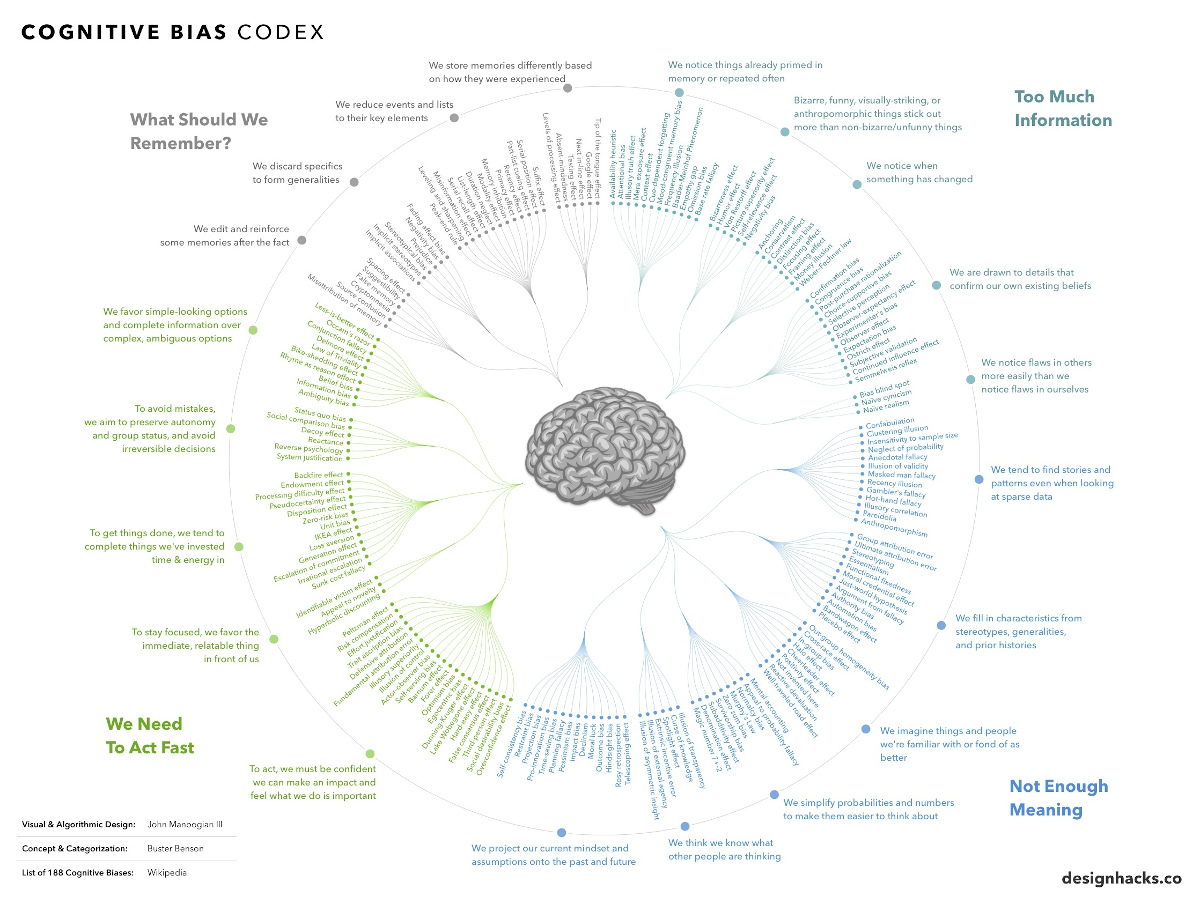
The human brain experiences discomfort when new information contradicts existing beliefs. This state, called cognitive dissonance, triggers defense mechanisms. Instead of revising views, people often prefer to reject new data or find alternative explanations for them.
Psychologist Leon Festinger demonstrated this in a famous study of a cult predicting the end of the world. When the prophecy failed, the believers did not become disillusioned but declared that their prayers saved humanity. Scientists behave similarly when their theories are refuted.
Confirmation Bias
People tend to seek information that confirms their beliefs and ignore contradicting data. This mechanism is especially strong among experts — the more a person has invested in a certain viewpoint, the harder it is to abandon it.
Darwin understood this and spent twenty years gathering evidence for evolution before publishing his theory. He knew that half-baked arguments would be easily rejected.
Social Pressure
Scientific communities are social groups with their own hierarchies, traditions, and group psychology. Young scientists risk their careers by opposing established opinions. Authoritative researchers defend their status by rejecting ideas that could discredit them.
Max Planck formulated this harshly: “Science advances funeral by funeral. New scientific truths triumph not because they convince opponents, but because opponents eventually die, and a new generation grows up familiar with the truth from childhood.”
Economic Interests
Often, scientific conservatism is backed by economic motives. Entire industries may resist discoveries that threaten their existence. Candle manufacturers fought against electricity, coachmen against automobiles, and pharmaceutical companies are slow to acknowledge cheap treatment methods.
Fear of Uncertainty
New discoveries often destroy the familiar picture of the world, generating anxiety and insecurity. Psychologically, people are more comfortable living in a predictable world, even if it is built on false foundations.
When Copernicus deprived Earth of its central place in the Universe, it was not just an astronomical but a psychological blow. Humanity suddenly found itself on a tiny planet lost in infinite space.
Anchoring Effect
The first information received creates an “anchor” — a starting point for all subsequent judgments. If a person first learned an incorrect theory, they will interpret new data through the lens of those initial perceptions.
Aristotelian physics dominated for two thousand years precisely because it became the “anchor” for understanding the world. Even as contradicting observations accumulated, they were explained within the old paradigm.
Professional Identity
Scientists often identify themselves with their theories. Criticism of scientific ideas is perceived as a personal attack. The more a researcher has invested in a certain concept, the more painfully they react to its refutation.
Linus Pauling, a two-time Nobel laureate, defended his erroneous model of DNA structure until the end of his life, which he proposed shortly before Watson and Crick. He could not admit that young competitors had surpassed him.
The Semmelweis Effect
The story of Ignaz Semmelweis gave name to an entire phenomenon — the “Semmelweis effect.” This is the reflexive rejection of new knowledge when it contradicts established beliefs and perceptions.
The effect manifests particularly vividly in the following situations:
-
Simplicity of the Solution paradoxically causes resistance. Handwashing seemed too primitive a remedy against deadly diseases.
-
Threat to Authority forces experts to reject ideas that undermine their status. Acknowledging Semmelweis’s correctness meant admitting their own responsibility for patient deaths.
-
Social Barriers hinder the acceptance of truth. Semmelweis was a Hungarian in an Austrian hospital, an outsider in the medical hierarchy.
-
Lack of Explanation makes the discovery vulnerable to criticism. Semmelweis could not explain the mechanism of disinfection.
Modern Challenges
The 21st century has brought new forms of resistance to scientific progress. Genetically modified organisms face mass protests despite scientific consensus on their safety. Climate change is denied by influential politicians and corporations. The anti-vaccination movement is gaining strength, threatening public health achievements.
Gene-editing technologies like CRISPR spark ethical debates about the boundaries of permissible interference in human nature. Artificial intelligence generates fears of losing control over technologies.
New Forms of Anti-Science
Modern resistance to science has acquired new traits:
Democratization of Opinions through the internet has created the illusion of equality of all viewpoints. A blogger without education can gain millions of followers by challenging scientists’ conclusions.
Selective Skepticism allows rejecting inconvenient scientific data while accepting convenient ones. Anti-vaxxers use medical achievements in other areas.
Conspiracy Theories explain scientific consensus as secret plots. Climatologists are accused of falsifying data for grants, and virologists of creating pandemics for enrichment.
Emotional Thinking displaces rational thinking. Vivid anecdotes about vaccine harm outweigh dry statistics on their benefits.
Information Age and New Threats
The internet has radically changed the dynamics of scientific information dissemination. On one hand, knowledge has become more accessible. On the other — false information spreads faster than reliable, and social media algorithms create “echo chambers” where people hear only opinions confirming their beliefs.
New phenomena have emerged: “infodemic” — an excess of contradictory information, artificial botnets creating the illusion of public opinion, and “deepfake” technologies making deception more sophisticated.
Paradox of the Information Society
Never before has humanity had such access to knowledge, but never before have so many people rejected scientific facts. This paradox is explained by several factors:
Information Overload forces people to rely on emotional reactions instead of critical analysis. It’s easier to believe a simple explanation than to sort through complex data.
Algorithmic Amplification creates information bubbles where people see only confirmations of their views. This intensifies polarization and makes dialogue impossible.
Commercialization of Attention forces media to produce sensational content that often contradicts scientific data.
Lessons from History
Analysis of the history of scientific discoveries reveals several universal patterns:
Time for Acceptance of new ideas depends on their revolutionary nature. Technologies with obvious practical benefits are accepted in 1-5 years, most scientific discoveries in 10-20 years, revolutionary theories in 20-50 years, and ideas that radically change worldviews may wait for recognition for over half a century.
Factors of Resistance include economic interests, religious beliefs, political considerations, and psychological mechanisms protecting existing perceptions.
Strategies for Overcoming include preparing irrefutable evidence, seeking influential allies, popularization through media, and demonstrating practical benefits.
Related Topics
Accuracy of knowledge
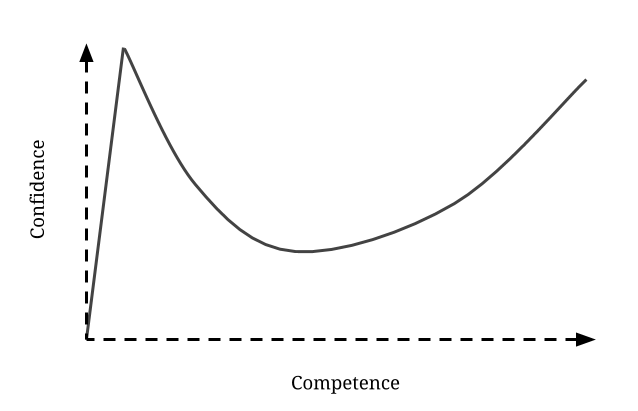
Why do we often overestimate the depth of our knowledge and other aspects of our cognitive abilities?
Searching for simple answers
Research into the mechanisms behind the desire for simpler and more convenient answers.

Capitalism
The price of your chocolate is child slavery. The world awaits its first trillionaire, while half of humanity struggles to survive. How did corruption, monopolies, and hidden slavery become the driving forces behind an economy that is destroying both the planet and you?

Problem list of Modern Society
A large and comprehensive catalog of systemic problems in modern society.