Resource-based economy
About an alternative to the established economic system, which creates artificial shortages, limits human potential, and destroys the planet's ecology.

Why Is It Necessary to Transition to a Resource-Oriented Economy?
The Collapse of the Monetary Illusion: When Dollars Matter More Than the Planet
The modern economic system has encountered a fundamental contradiction. We live on a planet with limited resources, but our economy is built on the premise of infinite growth. The main problem with the capitalist model is that it reduces the entire complexity of planetary resources to one abstract indicator — money.
The price of a product reflects only the private costs of the producer but ignores the true cost: the depletion of non-renewable fossils, the degradation of ecosystems, the accumulation of toxins in the biosphere. The market is supposed to “automatically” account for these external effects, but in practice, government mechanisms (taxes, quotas) cover only a small fraction of the real damage.
Systemic Flaws of the Monetary Economy
The Illusion of Democracy and Control
Democracy in a monetary system turns into an illusion of participation. Candidates are pre-selected by the economic elite, and real decisions are made by corporations and the military-industrial complex. Citizens’ freedom is limited by their purchasing power, not by the planet’s real ability to provide a decent life for everyone.
Artificial Scarcity Amid Abundance of Opportunities
The paradox of modernity: with enormous production capacities and technological possibilities, millions of people are deprived of basic needs. The fractional reserve system allows banks to create money out of thin air, concentrating wealth in the hands of a few. Producers deliberately create planned obsolescence in products, duplicate production for the sake of competition, and even destroy finished goods to maintain artificially high prices.
False Motivation and the Destruction of Creativity
Monetary motivation has spawned a culture where competition is more important than cooperation, and profit overrides human needs. History shows that the most important scientific discoveries were made by people motivated by curiosity and a desire to improve the world, not by financial gain. The modern system suppresses human ingenuity, directing it toward creating artificial needs instead of solving real problems.
The Alternative: Resource-Oriented Economy
Philosophical Foundations of the New Model
A resource-oriented economy is based on a simple principle: all people are equal co-owners of planet Earth. The main question is not who earned how much money, but how to create conditions for a decent existence for every person while rationally using the planet’s resources.
In true abundance of resources (which is already technologically achievable), money loses its meaning. Instead of fighting for access to scarce means, people gain direct access to necessary resources without resorting to bureaucratic structures.
Technological Solutions Already Exist
Many technologies for creating a sustainable economy have already been developed but are blocked by the current system:
Transport and Infrastructure: Magnetic bearings eliminate wear, presence sensors prevent collisions, anti-slip road coatings make transport safer.
Production: Modular design simplifies maintenance, high-quality materials ensure durability, electrostatic filters (technology over 75 years old!) protect the environment.
Waste Recycling: Existing methods allow minimizing waste through high-quality production and complete material recycling.
The main obstacle is the system of private ownership of technologies, patenting even human genes, commercialization of scientific research, and data secrecy for competitive advantage.
Alternative Models: From Theory to Practice
Economists have long noticed the problems of the traditional model. Ecological economics has existed for over 50 years but remains on the periphery of mainstream curricula. Meanwhile, several mature alternatives have been developed:
Steady-State Economy: Maintaining a constant size of the economy without GDP growth, with fixed levels of population and capital.
Circular Economy: A closed cycle of materials, where goods are designed for multiple uses and repairs.
Doughnut Economics: Development between a social minimum and the planet’s ecological limits.
Degrowth: Deliberate reduction of production in wealthy countries with a reorientation toward quality of life.
A New System of Motivation: Extension Instead of Competition
From Egoism to Natural Motivation
The idea that people work only for money is a myth. What matters to us becomes a natural motivator. Children from affluent families show initiative not for survival, but for self-realization. In the new system, the main incentives will be the realization of abilities, creative potential, care for the planet and other people.
Extension as a Principle of Action
Instead of the vague concept of “love,” the new system proposes a concrete principle of extension — actions that are equally beneficial to all people. Purifying water, developing vaccines, exchanging technologies, creating publicly accessible infrastructure — these are examples of extensional actions that do not burden recipients with a sense of debt.
Mechanisms of Transition: How Can This Happen?
Catalysts for Change
History shows that fundamental social changes occur not from the good intentions of individuals, but under the influence of biosocial threats and crises affecting a large number of people. Worsening environmental conditions, resource depletion, and climate change could become such catalysts.
The Role of the Information Revolution
The internet has already begun to free people from government restrictions on information, providing access to alternative ideas. This creates potential for global knowledge exchange and coordination of efforts toward transitioning to a new economic model.
What Can Be Done Right Now?
-
Develop Computational Models for Full Resource Accounting — Create a “profiler” for natural flows of materials, energy, and water.
-
Change Success Indicators: Instead of GDP, use indices of sustainable economic well-being.
-
Reform Market Architecture: Introduce strict quotas on resource extraction with their progressive reduction.
-
Implement Extended Producer Responsibility: If a company produces a product, it is responsible for its disposal and repair for 10-15 years.
-
Free Up Excess Labor Force: Eliminate professions solely related to servicing the monetary system (a significant portion of bankers, insurance agents, advertisers), redirecting human ingenuity toward solving real problems.
Conclusion: The Choice Is Ours
Humanity possesses creative potential that far exceeds its propensity for destruction. We are capable of creating paradise or hell on Earth — the only limitations are those we impose ourselves. A resource-oriented economy is not a utopia, but a logical evolution of economic relations in the era of technological abundance.
The transition to a new model is inevitable—the question is only whether it will occur through conscious transformation or through catastrophes and crises. Nature does not support species that have lost their usefulness, and our economic system is no exception. It’s time to replace outdated forms with new ones, more adapted to the reality of a limited planet and limitless human potential.
Related Topics
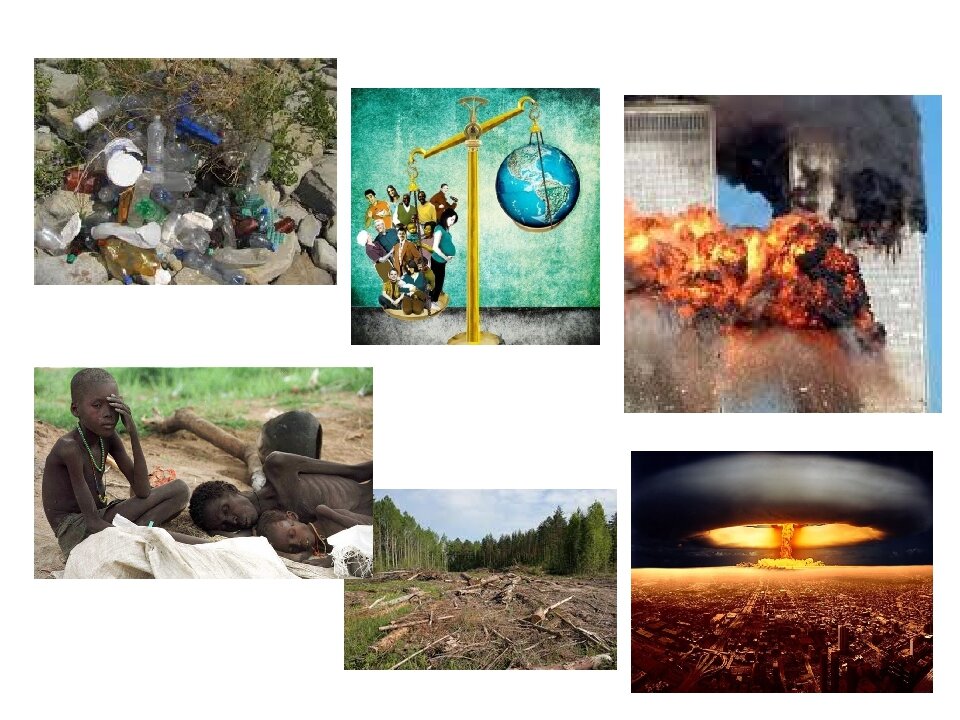
Problem list of Modern Society
A large and comprehensive catalog of systemic problems in modern society.
Resistance to science
An analysis of how society has resisted science and innovation throughout human history.