Non-semantic vocabulary
A list of popular non-semantic words, phrases, and expressions, as well as their translations into relatively accurate language.
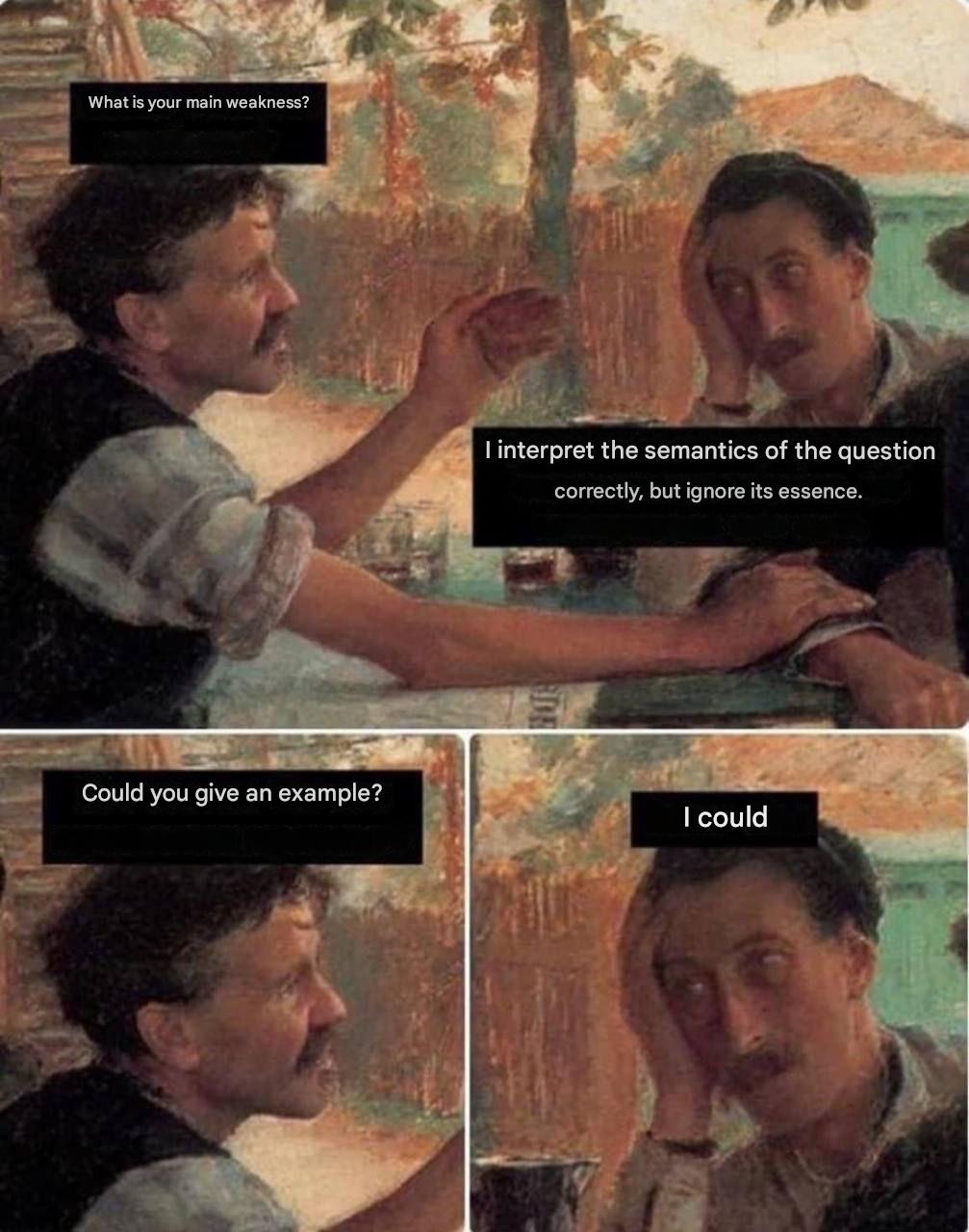
Guide to colloquial expressions (beta)
This dictionary describes the meaning (semantic core) of common, non-literal conversational phrases and expressions. The interpretation of these meanings depends on intonation, the context of the dialogue, and the relationship between the speakers.
A Note on Methodology: The phrasing “It seems to me that…” reflects a core principle of general semantics: language is not a reflection of objective truth but a map of an individual’s perception. This helps avoid equating words with reality and reduces the likelihood of unconscious, knee-jerk reactions.
Note: there’s might be mistakes in the translations.
Category 1: Disagreement, Criticism, and Disappointment
| Expression | Semantic Core (What is meant) | Context and Intonation | Level of Expression |
|---|---|---|---|
| Yikes. / Oof. | 1. It seems to me that I am disappointed by and/or negatively judging this situation or what you said.<br>2. It seems to me that I have nothing more to add. | Said after a 1-3 second pause. Tone is noticeably lower than usual. Often followed by silence, effectively ending the conversation topic. | Informal |
| lol / lmao | 1. It seems to me that my interpretation of your words is absurd and/or surprising.<br>2. Based on my interpretation of what you said, it seems to me that this doesn’t warrant a serious response.<br>3. It seems to me that I don’t know how to react. | Used in text/online or when verbally quoting internet slang. Typically replaces a more detailed response. | Internet Slang / Informal |
| Oh my God / Jesus / Oh God | 1. It seems to me that I disagree with and/or am shocked by your words/actions.<br>2. It seems to me that I am scared and/or worried by the situation.<br>3. It seems to me that I am surprised. | Spoken with a sharp rise or fall in pitch. Volume may increase significantly. | Emotional / Neutral |
| What the hell? / That’s complete nonsense. | It seems to me that I strongly disagree and/or find your words to be meaningless. | Said with an incredulous or questioning intonation. The negative part of the phrase (“hell,” “nonsense”) is stressed. | Expressive / Informal |
| Are you an idiot? / What the f*ck? | It seems to me that I am so displeased with your action that I cannot contain my outrage. | Volume increases two- to threefold. Spoken rapidly without pauses. Used to interrupt the other person. | Rude / Aggressive |
| You’d forget your head if it wasn’t screwed on. | It seems to me that I am annoyed by your absent-mindedness or forgetfulness. | Said in response to an act of forgetfulness. The word “head” is stressed. | Sarcastic / Informal |
| Fuck this. / Go fuck yourself. | It seems to me that I vehemently disagree with you, and your position is provoking a strong negative emotional reaction in me. | Often shouted. Used to terminate a conversation abruptly. | Vulgar / Taboo |
| There you go again… / Classic you. | It seems to me that you are repeating the same annoying and/or erroneous behavior, and I am tired of pointing it out. | Said with irritation, often with stress on “again” or “classic.” | Reproachful / Generalizing |
| Nice one. / Way to go. | It seems to me that you have made a mistake. | Intonation drops toward the end of the phrase. Often paired with a sarcastic smile or an eye-roll. | Ironic / Passive-aggressive |
| You’re a real clown. / What a joke. | It seems to me that your behavior is foolish or ridiculous. | Said with a smirk. The word “clown” or “joke” is stressed. | Derogatory / Sarcastic |
| Seriously? / Are you for real? | It seems to me that I do not believe what you just said. | Questioning intonation, possibly with raised eyebrows. | Incredulous / Emotional |
| Whoa / Wow / That’s wild! | 1. It seems to me that I am surprised or impressed.<br>2. It seems to me that I don’t know how else to express my reaction. | Spoken with a rising tone. May be accompanied by wide eyes. | Expressive / Slang |
| Cool. / Neat. | 1. It seems to me that this is interesting, but I don’t want to get into the details.<br>2. It seems to me that this is interesting or fun.<br>3. It seems to me that I don’t know how to react. | Spoken with a slight, even tone. Often used to signal the end of a topic. | Neutral / Slang |
| Bruh… / Dude… | It seems to me that you’ve made a mistake, and I want to point it out to you. | Said with an informal, almost pitying tone. The word “Bruh” or “Dude” is drawn out. | Informal / Slang |
| Son of a bitch / Bullshit / Asshole / Shit. | 1. It seems to me that I am negatively judging a situation or person.<br>2. It seems to me that I am expressing annoyance or anger. | Spoken with stress on the epithet. Volume may increase 1.5-2x. | Rude / Emotional |
| Damn it. / Shoot. | It seems to me that I am expressing mild annoyance or surprise. | Spoken with a slight drop in tone. May be accompanied by a sigh or shaking of the head. | Mildly Negative |
| For real? / Fr? | It seems to me that I doubt the truth of your words and/or I want you to confirm them. | Said with a questioning intonation or with the syllables drawn out. | Slang / Questioning |
| Come on. | 1. It seems to me that I am urging you to action.<br>2. It seems to me that I dislike your slowness or indecisiveness. | Spoken with an urging intonation. May be accompanied by a hand gesture. | Urging / Slang |
| Meh. / It’s… fine. | 1. It seems to me that I am not impressed.<br>2. It seems to me that this isn’t good enough or that I disagree. | Said with a drawn-out, pensive intonation, often with a shrug or a skeptical facial expression. | Dismissive / Disappointed |
| Facepalm. | It seems to me that what was said or done is so stupid that I am experiencing a feeling of second-hand embarrassment and/or disappointment. | An internet-culture term said with a tone of utter exhaustion at someone else’s foolishness. May be accompanied by the actual gesture. | Derogatory / Slang |
| Are you trying to school me? / Don’t feed me that line. | It seems to me that you are trying to deceive me or give me an inappropriate lecture. | Said with a distrustful, slightly aggressive tone. Perceived as an accusation of insincerity. | Informal / Accusatory |
Category 2: Coercion, Lecturing, and Covert Control
| Expression | Semantic Core (What is meant) | Context and Intonation | Level of Expression |
|---|---|---|---|
| Use your head. / Think for a second. | 1. It seems to me that I disagree with your point of view.<br>2. I want you to understand/accept my point of view. | Typically said by someone of higher status (age, rank) to a subordinate. Speech pace slows down. | Condescending / Informal |
| Think. | I want you to arrive at the answer I’m expecting more quickly. | Said as a single-word command. Followed by a 2-5 second pause. | Informal / Blunt |
| Were you even listening? / You didn’t get it at all. | It seems to me that your interpretation does not align with what I was trying to convey. | Said after receiving a response from someone that does not match the speaker’s expectations. | Informal / Reproachful |
| Just listen to your parents. / Stick with what you know. | Do not be swayed by outside influence (ideology, opinions) that I do not approve of. Remain within the value system that I am comfortable with. | Said by an adult to a child/teenager. May be accompanied by a pointing gesture. | Preachy / Informal |
| You’re a grown-up. | It seems to me that you should be responsible for yourself, and/or I am unwilling/unable to help you. | Condescending intonation, with stress on “grown-up.” | Manipulative / Preachy |
| Everyone does it. / That’s just the way it is. | 1. I am unwilling/unable to explain my position.<br>2. It seems to me that your reaction should conform to commonly accepted standards. | Said with a confident, final tone. | Generalizing / Coercive |
| If you don’t…, it just means you don’t care. | It seems to me that you are not showing sufficient investment in this matter. | Emotionally charged intonation, with stress on “don’t care.” | Manipulative / Emotional |
| Oh, whatever. | It seems to me that I don’t want to continue this conversation because your reactions don’t meet my expectations/desires. | Said with mild irritation and a dismissive wave of the hand. | Mildly Dismissive / Informal |
| Get out of here! / No way. | It seems to me that you are exaggerating or not telling the truth. | Said with a tone of disbelief. The first word (“Get,” “No”) is stressed. | Slang / Skeptical |
| Look who’s talking. | It seems to me that you possess the same traits that you are criticizing in me. | A defensive response to criticism. | Defensive / Counter-accusatory |
| Serves you right. | It seems to me that you have received a just punishment for your actions. | Said with a tone of satisfaction. Stress is on the word “right.” | Gloating / Moralizing |
| Be realistic. | It seems to me that your expectations or plans do not align with reality. | Said with a preachy, know-it-all intonation. | Preachy / Condescending |
| Open your eyes. | It seems to me that you are failing to see the obvious things that I see. | Said with stress on the word “open.” Can be accompanied by a pointing gesture. | Preachy / Insistent |
| Get your head out of the clouds. | It seems to me that you are too easily distracted or lost in thought. | Said with mild irritation. Stress is on the word “head.” | Critical / Grounding |
| It is what it is. | It seems to me that this demand is not up for discussion, and any objection you have is pointless. | Said with an unyielding, conversation-ending tone. Often used to shut down debate in hierarchical relationships. | Categorical / Authoritarian |
| Are you trying to be a smart-ass? | 1. It seems to me that your arguments or questions are threatening my ego.<br>2. It seems to me that you don’t know enough about this topic to be making such claims. | Said with a threatening or condescending tone to shut down a discussion. | Aggressive / Suppressive |
| I say one thing, you say ten. | It seems to me that you are taking far too long to compromise or agree with my point. | Said with reproach and irritation to imply the other person is being overly defensive or argumentative. | Reproachful / Irritated |
Category 3: Agreement, Confirmation, and Positive Assessment
| Expression | Semantic Core (What is meant) | Context and Intonation | Level of Expression |
|---|---|---|---|
| Exactly. / You said it. | 1. It seems to me that I agree with you.<br>2. It seems to me that your phrasing perfectly matches my own thoughts. | Said immediately after the other person’s statement, without a pause. The tone rises. | Informal / Positive |
| Fucking A. / No shit. | 1. It seems to me that I completely agree with your negative assessment of the situation.<br>2. It seems to me that my own assessment is just as negative as yours. | Said with heavy stress on the curse word. Volume increases. | Vulgar / Expressive |
| You’re a natural! / You’re a genius! | It seems to me that you are exceptionally good at this, but I don’t know and/or don’t care to analyze why. | Said after observing someone perform an action well. The words “natural” or “genius” are stressed. | Positive / Emotional |
| Thank God. | It seems to me that I am extremely relieved that things ended this way. | Said upon learning about the positive outcome of an event. | Emotional / Neutral |
| Nailed it! / Spot on! | It seems to me that you have expressed an absolutely precise thought that perfectly aligns with my own. | A short, energetic phrase. Said with an approving, joyful intonation. | Approving / Expressive |
| Relatable. / Big mood. | It seems to me that the situation you’ve described is very familiar and typical; I recognize my own experience in it. | Said with a knowing smile. Used to express a shared experience. | Slang / Empathetic |
| That’s fire! / That’s lit! / Awesome! | It seems to me that this is excellent, very cool, and it evokes a strong positive emotional reaction in me. | A short, exclamatory word. Said with enthusiasm. | Expressive / Slang |
Category 4: Evasion, Indifference, and Ending a Conversation
| Expression | Semantic Core (What is meant) | Context and Intonation | Level of Expression |
|---|---|---|---|
| Got it. / Uh-huh. | It seems to me that I lack the time, desire, energy, or arguments to respond. I want to end this conversation. | Monotone, flat pitch. No follow-up questions are asked. Gaze is averted from the speaker. | Neutral / Dismissive |
| Screw it. / To hell with it. | 1. I propose we stop paying attention to this; it’s not important.<br>2. It seems to me that we can compromise on this issue; I am willing to yield. | Spoken with a falling tone. Accompanied by a dismissive hand gesture. | Blunt / Informal |
| Stop whining. / Don’t be a wimp. | It seems to me that your complaints are making me uncomfortable, and I don’t want to or don’t know how to help you. | Said in response to someone’s complaints. The pace of speech increases. | Invalidating / Rude |
| There, there. / Hang in there. | I believe that I am not indifferent to your problems, but I don’t know how to help. | Spoken with 1-2 second intervals between words. No offer of concrete help follows. | Detached / Informal |
| It’s like talking to a brick wall. | 1. It seems to me that I can’t get through to you and/or your interpretations don’t match my expectations.<br>2. It seems to me that I won’t be able to get my point across, so we should stop talking. | Said after several failed attempts to explain something to the other person. | Reproachful / Emotional |
| Well, sorry. | It seems to me that I want you to just accept what I did. | Said quickly, often with a slight shrug. The tone is sarcastic, not genuinely apologetic. | Pseudo-apologetic |
| Suit yourself. / Your call. | It seems to me that I disagree but do not want to continue the argument. | A sharp or tired tone; intonation falls. | Detached / Informal |
| It happens. | 1. It seems to me that I do not wish to discuss this topic in detail.<br>2. It seems to me that this isn’t worthy of attention. | Spoken softly, with a pause. May be accompanied by a sigh. | Formally Sympathetic |
| Figure it out yourself. / That’s a you problem. | 1. It seems to me that I do not want to be involved in solving this.<br>2. It seems to me that it would be right for you to take responsibility for this.<br>3. It seems to me that I am too busy to help you right now. | A sharp, alienated tone. | Harsh / Detached |
| Fascinating… | It seems to me that I am not interested in this at all. | Monotone voice, possibly with a slight, sarcastic smirk. | Passive-aggressive |
| IDK / Dunno. | 1. It seems to me that I don’t want to take responsibility for an opinion or decision.<br>2. It seems to me that I don’t have enough information to reach a conclusion.<br>3. It seems to me that I am unsure of the answer. | Voice lowers. Often accompanied by a shrug. | Evasive / Uncertain |
| Nobody gives a shit. | 1. It seems to me that this topic is not worth our attention.<br>2. It seems to me that you are being disruptive/distracting, which is causing negative emotions. | Spoken sharply and often with an aggressive tone. | Aggressive |
| Ugh, I’m done! | It seems to me that I am no longer willing/able to continue this argument because I dislike it. | Said with a hurt or irritated intonation, often in response to an argument that can’t be refuted. Ends the conversation. | Petulant / Temperamental |
| Forget it. / Drop it. | It seems to me that this topic isn’t worth further discussion or effort. I suggest we stop. | Said with a dismissive gesture, in a relaxed or, conversely, a tense manner to change the subject. | Informal / Invalidating |
| We’ll see. | 1. It seems to me that I don’t want to make a promise or give a direct answer because I’m not sure.<br>2. It seems to me that I want to say no to you while minimizing a negative reaction. | Said with a neutral or non-committal intonation, leaving the situation unresolved. | Evasive / Non-committal |
Category 5: Skepticism, Refusal, and Expressing Improbability
| Expression | Semantic Core (What is meant) | Context and Intonation | Level of Expression |
|---|---|---|---|
| Yeah, right! / In your dreams! | It seems to me that I refuse to do this and/or I consider your request/expectation to be audacious. | Said immediately in response to a request. The first word (“Yeah,” “In”) is stressed and spoken louder. | Expressive / Informal |
| Keep dreaming. / As if. | 1. It seems to me that I refuse to do this and/or I consider your request to be audacious.<br>2. I consider your expectations or plans to be highly improbable. | Spoken with the second word drawn out. The tone falls. | Sarcastic / Informal |
| I doubt it. / Unlikely. | I believe that the probability of this is relatively low (typically somewhere around 5-20%). | Said with a 1-2 second pause before answering. Pace of speech slows. | Neutral |
| That’s impossible. / That’ll never happen. | I am not aware of any way to achieve this goal, and/or I believe that others are not aware of one either. | The negative word (“impossible,” “never”) is stressed. Spoken with a steady, unwavering voice. | Categorical |
| That’s pointless. | It seems to me that I see no benefit in this. | Said with stress on the word “pointless.” No explanation of reasons is offered. | Neutral |
| Something like that. / Kinda. | For the most part, you’ve understood correctly, but it seems to me that I am too lazy and/or it’s too inconvenient to explain in more detail. | A soft, uncertain tone. May be accompanied by a shrug. | Evasive / Informal |
| Some other time. | It seems to me that I do not want to do this right now. | Said evasively, without offering a specific alternative time. A soft “no.” | Formal / Detached |
| That’s life. | It seems to me that I don’t want to look for the causes of this problem, so I suggest we just accept the situation as it is. | A philosophical, often dismissive tone. Accompanied by a sigh or shrug. | Resigned / Cliché |
| No way! / Get out of here! | It seems to me that I am extremely surprised by what you said and/or I am expressing disbelief. | A short, energetic, exclamatory phrase. Said with wide eyes. | Emotional / Expressive |
| And? / So what? | It seems to me that I do not understand the significance of what you just said. | Said with a challenging or dismissive intonation. | Blunt / Confrontational |
| Big deal. | It seems to me that I am not impressed by what you’ve presented as surprising or important. | Said sarcastically. | Dismissive / Sarcastic |
| I have my doubts. | It seems to me that I do not believe this is true or likely. | A formal, considered tone. Slower pace than “I doubt it.” | Formal / Neutral |
| You’re one to talk. | It seems to me that you are guilty of the very thing you are criticizing. | A defensive or aggressive response to criticism. | Accusatory / Defensive |
| You’re asking for too much. | It seems to me that your request or expectation is unreasonable. | Said with a warning tone. | Warning / Judgmental |
Related Topics
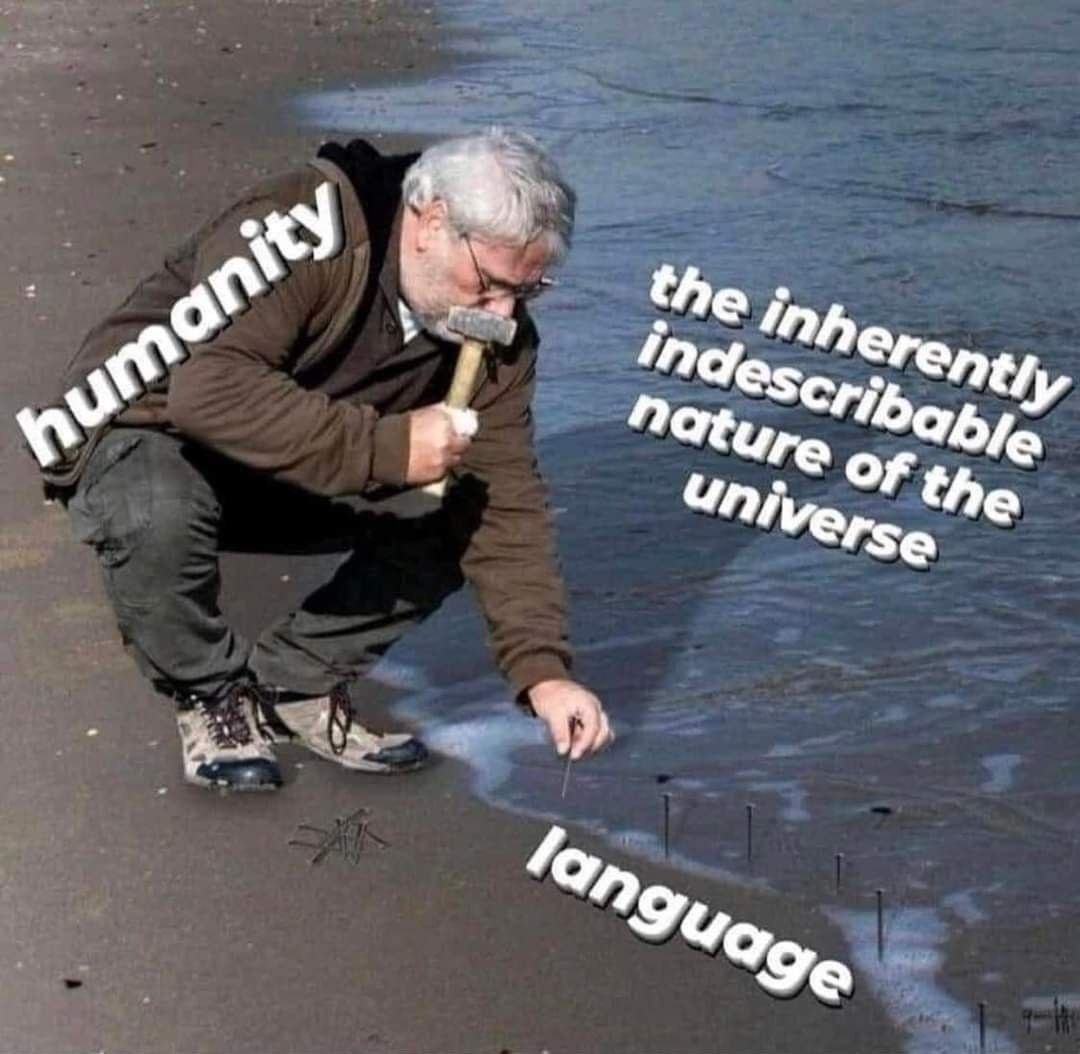
Relativity
On the fundamental aspect of rational thinking, and not just Einstein's theory — relativity.

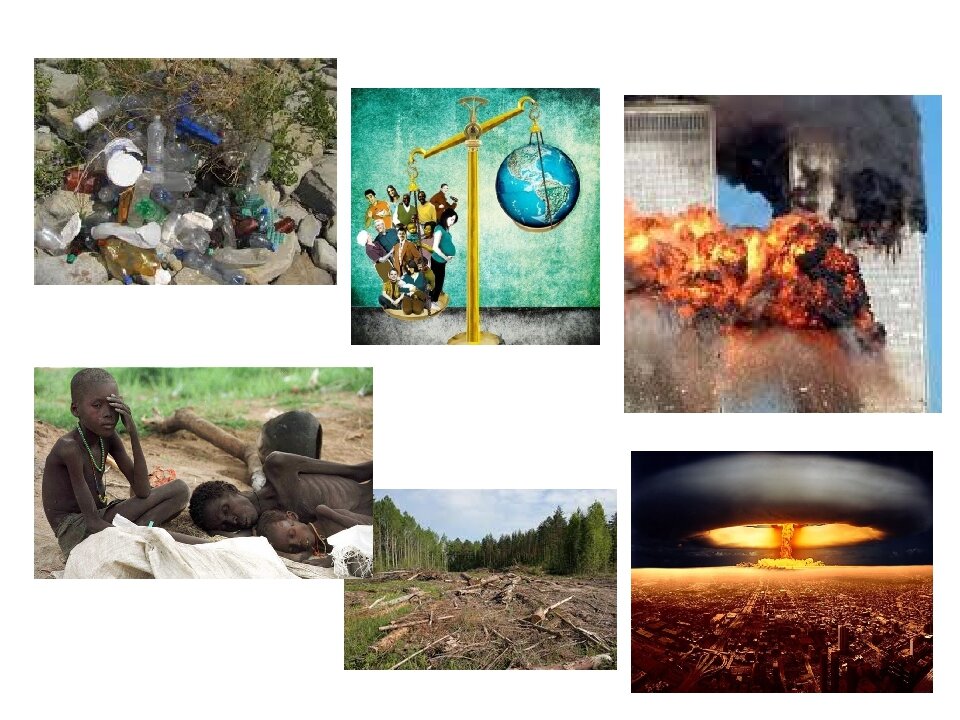
Problem list of Modern Society
A large and comprehensive catalog of systemic problems in modern society.

Why You Shouldn't Be Indifferent to Strangers?
Why indifference to others' thinking destroys civilization: the truth about how your beliefs affect the entire world.