What is objectivity?
What objectivity is and why it does not exist.
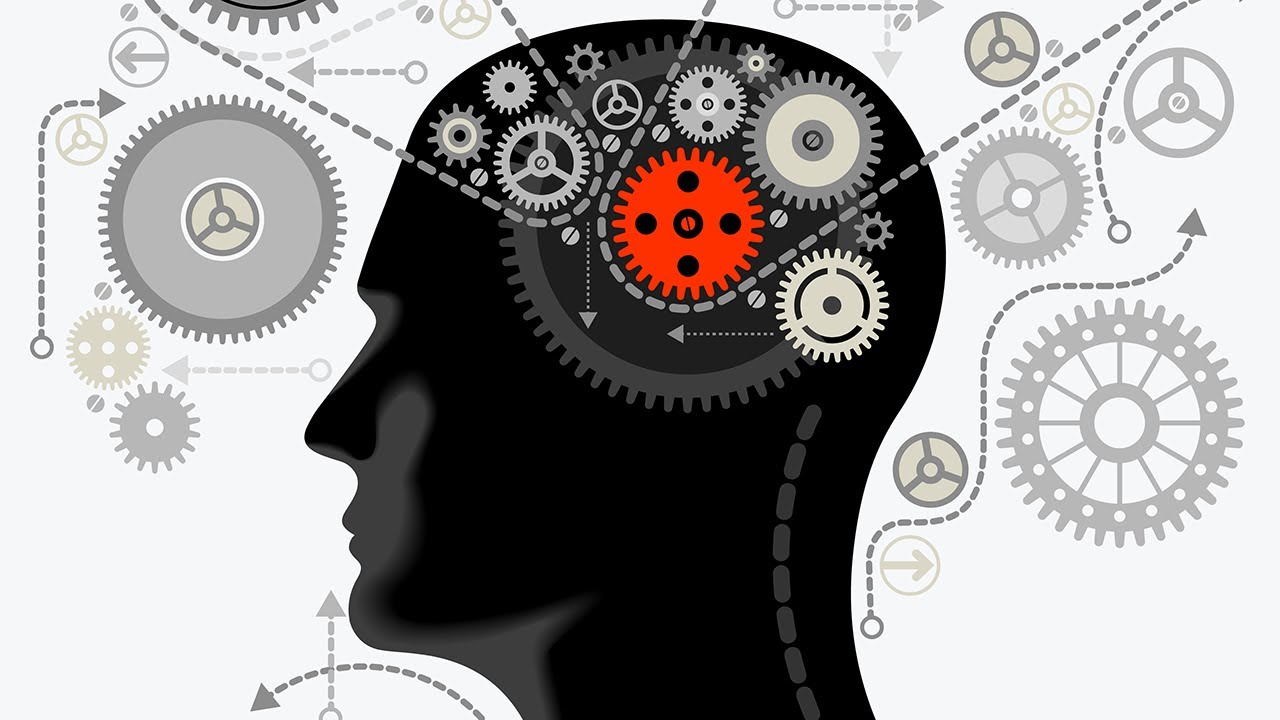
What is Objectivity and Why is it Impossible?
Introduction: The Illusion of Absolute Truth
The pursuit of objective knowledge of the world is one of the oldest and most noble tasks of humanity. From ancient philosophers to modern scientists, people have tried to find a way to describe reality “as it is,” independent of our prejudices, limitations, and subjective interpretations. However, the deeper we delve into the study of the nature of cognition, the clearer the paradoxical truth becomes: complete objectivity is fundamentally unattainable.
This does not mean that we should fall into relativism or abandon the scientific method. Rather, understanding the limitations of objectivity helps us approach the process of cognition more honestly and effectively, acknowledging its inevitable incompleteness and contextuality.
Biological Limitations of Perception
Narrow Windows of Perception
Human cognition begins with perception, and perception is limited by our biological nature. We see only a narrow spectrum of electromagnetic radiation (380-700 nanometers), hear sounds in the range of approximately 20 Hz to 20 kHz, and sense temperature in a relatively small range. Bees see ultraviolet, bats navigate using echolocation, snakes sense infrared radiation.
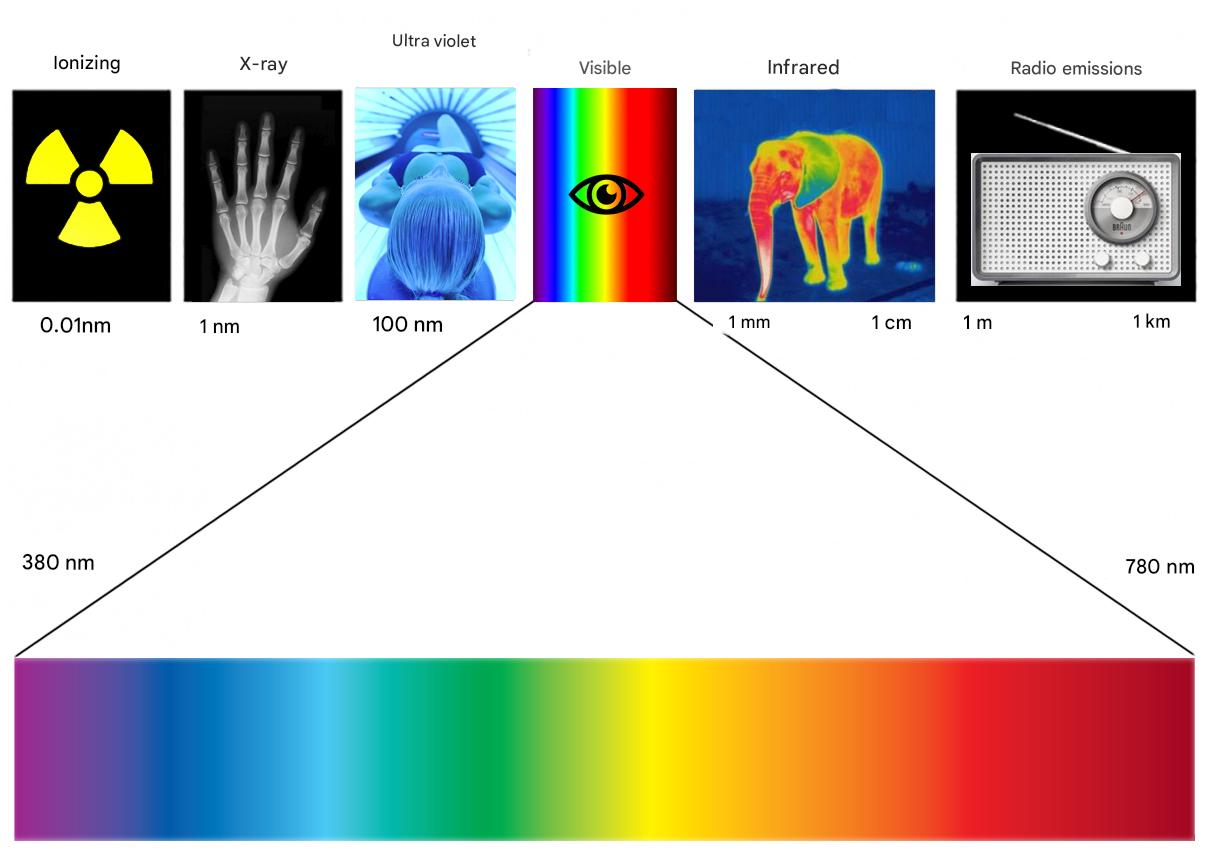
Each biological species creates its own unique “map of reality,” based on the sensory channels available to it. German biologist Jakob von Uexküll called this phenomenon “umwelt” — the perceptual world in which an organism exists. Our human umwelt is just one of countless possible ways to interact with reality.
Active Interpretation in Perception
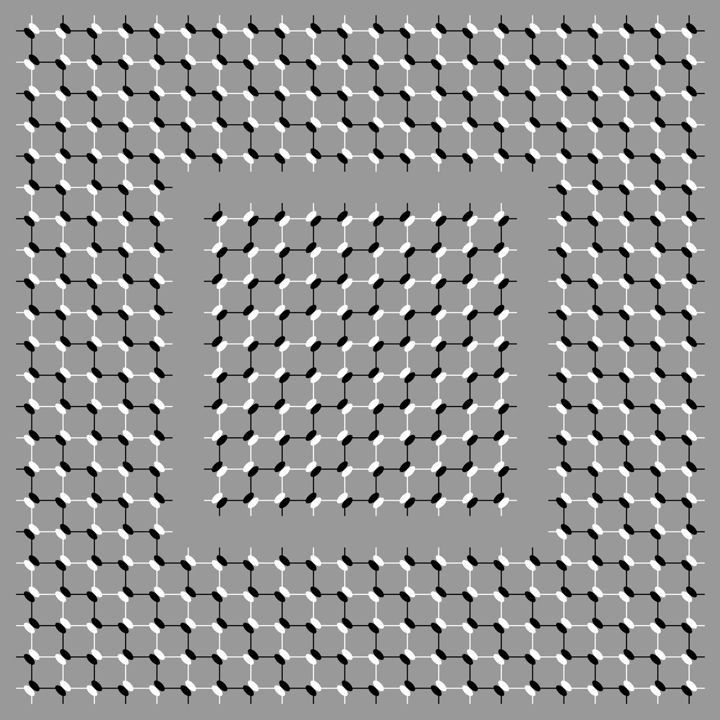
Even within our biological limitations, the brain does not passively record information but actively interprets it. Visual illusions, contrast effects, phenomena like the “blind spot” demonstrate that perception is a constructive process. The brain fills in gaps, highlights patterns, and creates a coherent picture from fragmentary data.
Neurobiological studies show that our perception of color, shape, and motion depends on complex information processing in various brain areas. What we consider “direct” perception of reality is actually the result of multiple interpretations and reconstructions.
Perspective of General Semantics
The Map is Not the Territory
Alfred Korzybski, the founder of general semantics, formulated the fundamental principle: “the map is not the territory.” Any of our descriptions of reality are merely maps, models, abstractions that inevitably simplify and distort what they attempt to represent.
In the image below, the square in the center does not move, but our brain “fills in” the picture based on its “predictions,” which can be deceived by unusual color combinations.
The metaphor “the map is not the territory” is especially important for understanding the limitations of objectivity. Even the most accurate scientific theories remain maps, not the territory itself. Newtonian mechanics perfectly describes the motion of macroscopic objects but proves inapplicable in the microworld or at near-light speeds. This does not make it “wrong” — it remains a useful map for a certain scale of reality.
Levels of Abstraction
General semantics introduces the concept of “levels of abstraction” — from direct sensory experience to the most general conceptual constructs. Each transition to a higher level of abstraction inevitably involves loss of information and the introduction of interpretations.
When we say “table,” we abstract from a specific object with all its unique characteristics. When we say “furniture,” we abstract even further. Each level of abstraction is useful for certain purposes, but none captures the object in its entirety.
Semantic Reactions
People react not to events as such, but to their interpretations of these events. Our “semantic reactions” are shaped by language, culture, and personal experience. The same fact can evoke diametrically opposite reactions in different people depending on how they interpret it.
This means that our “objectivity” is always colored by our semantic reactions. We cannot step outside our own system of interpretations to view the world “from God’s point of view.”
Philosophy of Mind and the Problem of Qualia
The Hard Problem of Consciousness
David Chalmers formulated the “hard problem of consciousness” — the question of why we have subjective experience and how it arises from physical processes in the brain. Even if we fully describe the neural mechanisms of perception, the mystery remains: why does red look exactly that way and not another?
Qualia — the subjective, qualitative aspects of conscious experience — are fundamentally inaccessible to external observation. No one can experience my sensations or fully understand how I experience the world. This creates a fundamental asymmetry between first-person and third-person perspectives in cognition.
The Problem of Other Minds
We can study other people’s behavior, scan their brains, analyze their statements, but we can never gain direct access to their subjective experience. This creates a fundamental uncertainty in understanding how others perceive the world.
The philosophical zombie — a hypothetical being that behaves as if conscious but lacks internal experience — remains logically possible. We cannot be absolutely certain that other people possess consciousness similar to ours.
Intentionality and Directedness of Consciousness
Consciousness is always directed toward something — it has an intentional structure. We are not just conscious, but conscious of something as something. This directedness of consciousness means that any cognition occurs from a certain “point of view,” within certain intentions and interests.
Phenomenologists have shown that our perception of the world is always structured by our projects, expectations, and lifeworld. We cannot occupy a “neutral” position of an absolute observer.
Emergent Nature of Consciousness
Complexity Gives Rise to New Properties
Consciousness is an emergent property of a complex neural system. Emergence means that at a certain level of complexity, new properties arise that cannot be predicted or explained based on the properties of the constituent elements.
Just as the properties of water cannot be derived from the properties of hydrogen and oxygen, consciousness cannot be fully explained through descriptions of neurons. This does not imply some mystical “soul,” but points to the fundamental role of organization and interaction in creating new levels of reality.
Recursivity and Self-Reference
Consciousness is characterized by the ability for reflection — we can think about our thoughts, be aware of our awareness. This recursive structure creates the possibility for infinite deepening of self-knowledge, but also for fundamental limitations.
Gödel’s theorems showed that any sufficiently complex formal system contains statements that cannot be proven or disproven within the system itself. Similarly, consciousness attempting to know itself encounters fundamental limitations of self-reference.
Collective Emergence
Consciousness does not exist in isolation — it is formed in the process of social interaction. Language, culture, and social institutions create collective forms of consciousness that transcend individual limitations but introduce new ones.
Each culture creates its own “social reality” — a system of meanings, values, and institutions. These systems have their own logic of development and influence individual consciousness in ways that are often not realized by the participants themselves.
Quantum Mechanics and the Observer
Uncertainty Principle
Quantum mechanics has challenged the classical notion of objective reality existing independently of the observer. Heisenberg’s uncertainty principle shows that there are fundamental limits to the simultaneous precise measurement of certain pairs of particle properties.
This is not just technical limitations of our measuring instruments but fundamental properties of reality at the quantum level. The act of measurement affects the system, making fully objective observation impossible.
Measurement Problem
In quantum mechanics, the measurement process plays a special role — it “collapses” the wave function, turning a superposition of possibilities into a definite outcome. But the boundaries between the quantum system and the classical measuring instrument remain blurred.
Various interpretations of quantum mechanics (Copenhagen, many-worlds, hidden variables) offer different solutions to this problem, but all of them question the naive notion of objective reality.
Social Construction of Reality
Institutional Nature of Truth
What we consider “objective facts” is often socially constructed. Money has value only because we collectively believe in its value. States exist only because people recognize their legitimacy. Scientific “facts” are accepted by the scientific community through complex processes of peer review, discussions, and replication of results.
This does not mean that “everything is relative” or that nature imposes no constraints on our beliefs. But it shows that our “objectivity” is always mediated by social processes and institutions.
Paradigms and Scientific Revolutions
Thomas Kuhn showed that scientific development occurs not through simple accumulation of facts but through paradigm shifts — fundamental ways of seeing and understanding the world. What is considered an “objective fact” within one paradigm may turn out to be an artifact or illusion within another.
The transition from the geocentric to the heliocentric system, from Newtonian mechanics to relativity theory — these are not just refinements but fundamental changes in the understanding of the nature of reality.
Informational and Cognitive Limitations
Bounded Rationality
Research in cognitive psychology shows that human thinking is subject to multiple systematic biases. Heuristics that help us make quick decisions under uncertainty also lead to predictable errors in judgments.
Confirmation biases make us seek information that confirms our beliefs and ignore contradictory data. Anchoring effects influence our estimates randomly. These cognitive features are not “defects” — they are evolutionarily adaptive, but they limit our ability for objective cognition.
Information Overload
In the modern world, we face information overload — the volume of available information far exceeds our processing capabilities. This forces us to use filters, simplifications, and rely on authorities. Each such filter introduces its own distortions into our understanding of reality.
Search engine and social media algorithms create “filter bubbles,” showing us information that matches our previous interests and beliefs. This can reinforce our prejudices and limit our access to alternative viewpoints.
Temporal and Historical Limitations
Historicity of Cognition
Our understanding of the world is shaped in a specific historical context. What seemed obvious and objective to previous generations may appear limited or erroneous to us. Similarly, our “objective” knowledge will look that way to future generations.
Michel Foucault’s archaeology of knowledge shows how what is considered true and objective in a certain era is determined by “discursive formations” — systems of rules that define what can and cannot be said, what is considered knowledge and what is ignorance.
Temporal Structure of Consciousness
Consciousness has a complex temporal structure — it includes retentions (retention of the past), presentations (present impressions), and protentions (anticipations of the future). Our understanding of the present is always colored by our memories and expectations.
Moreover, the process of cognition itself unfolds over time. We cannot grasp reality in a single moment — our understanding is formed through a sequence of experiences, reflections, and adjustments. This temporality of cognition makes achieving “timeless” objectivity impossible.
Practical Implications
Epistemological Humility
Understanding the limitations of objectivity should not lead to skepticism or relativism. Rather, it should cultivate epistemological humility — recognition that our knowledge is always incomplete, provisional, and open to revision.
This humility does not weaken science but strengthens it, making it more honest and effective. Acknowledging limitations helps better understand the conditions of applicability of our theories and be prepared for their revision.
Methodological Pluralism
If there is no single “objective” way of knowing reality, then multiplicity of approaches gains value. The scientific method, phenomenological analysis, hermeneutic understanding, artistic insight — all these ways can complement each other, illuminating different aspects of reality.
It is important not to try to reduce everything to one method but to learn to integrate various perspectives, understanding their strengths and weaknesses.
Dialogical Truth
If individual objectivity is limited, then dialogue between different viewpoints gains particular importance. Truth becomes not monological (possession of correct beliefs) but dialogical (a process of mutual testing and enrichment of perspectives).
This requires developing skills of serious listening, the ability to adopt another’s point of view, and readiness to revise one’s beliefs under the influence of others’ arguments.
Conclusion: Objectivity as a Regulative Idea
The non-existence of complete objectivity does not mean we should abandon the pursuit of it. Objectivity remains an important regulative principle — an ideal that guides our efforts, even if it can never be fully achieved.
Just as a mathematician strives for infinity, knowing they will never reach it, a researcher can strive for objectivity, understanding its fundamental unattainability. This striving helps us:
- Minimize the influence of prejudices and distortions
- Develop more accurate research methods
- Seek reproducible and universal patterns
- Critically evaluate our own beliefs
- Remain open to new data and interpretations
Paradoxically, acknowledging the limitations of objectivity can make us more objective. When we stop claiming absolute truth, we become more attentive to our limitations, more honest about uncertainties, more open to alternative viewpoints.
Ultimately, the absence of complete objectivity does not make our cognition meaningless — it makes it human. We know the world not as gods possessing absolute knowledge, but as finite beings with limited but constantly developing capabilities. And in this finitude, in this perspectivity of our cognition, lies not weakness but its specific strength and beauty.
Understanding the limitations of objectivity opens the path to a richer, multidimensional, and ultimately more true relationship to reality — a relationship that recognizes the complexity of the world and the humility of our attempts to understand it.
Related Topics
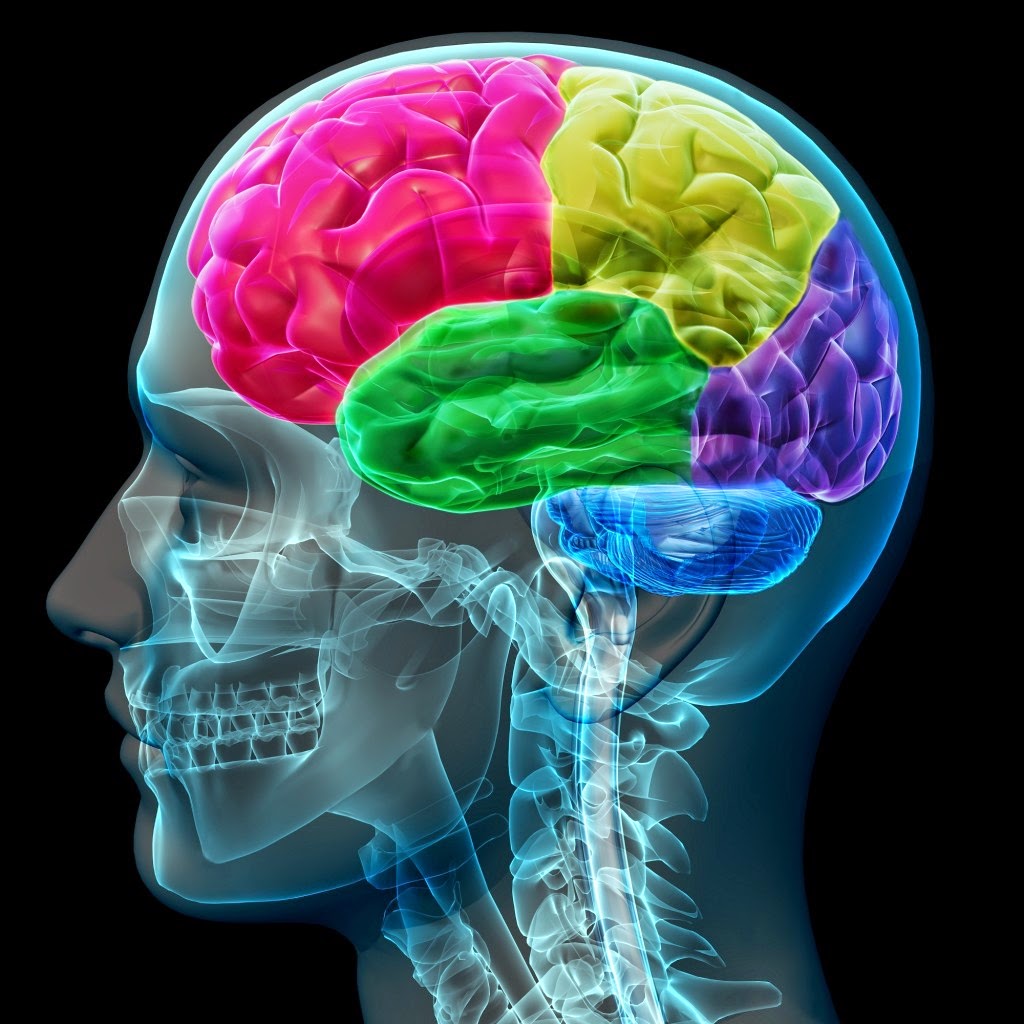
What is the brain and how do you use it?
About the processes that occur in the brain during thinking and learning, how our actions influence its development, how to control it, etc.
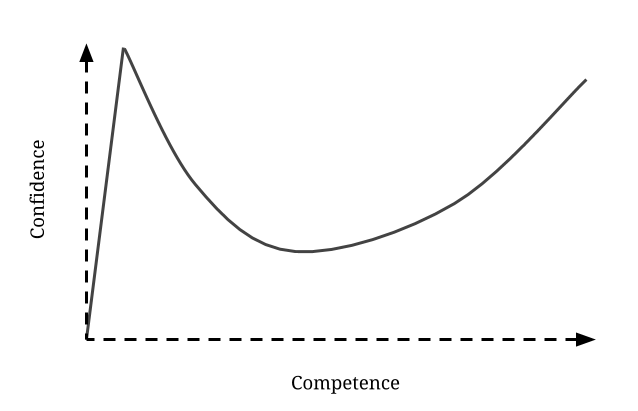
Accuracy of knowledge
Why do we often overestimate the depth of our knowledge and other aspects of our cognitive abilities?
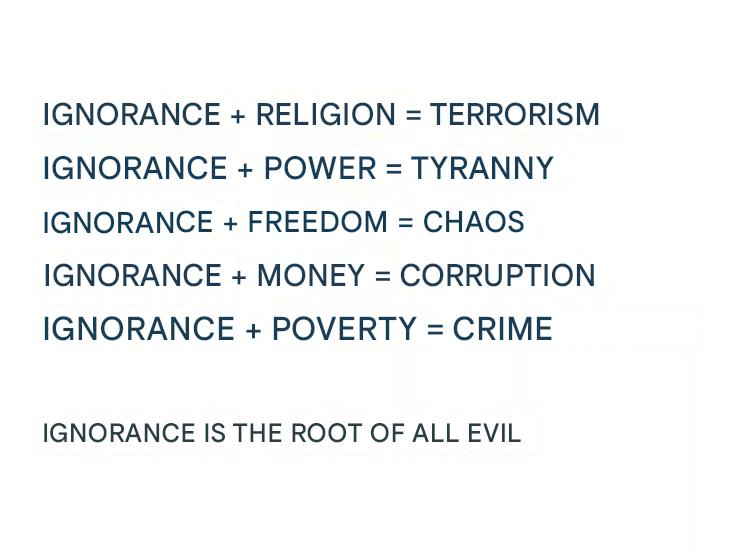
Rationality
About stereotypes regarding rational individuals and what rationality truly entails.
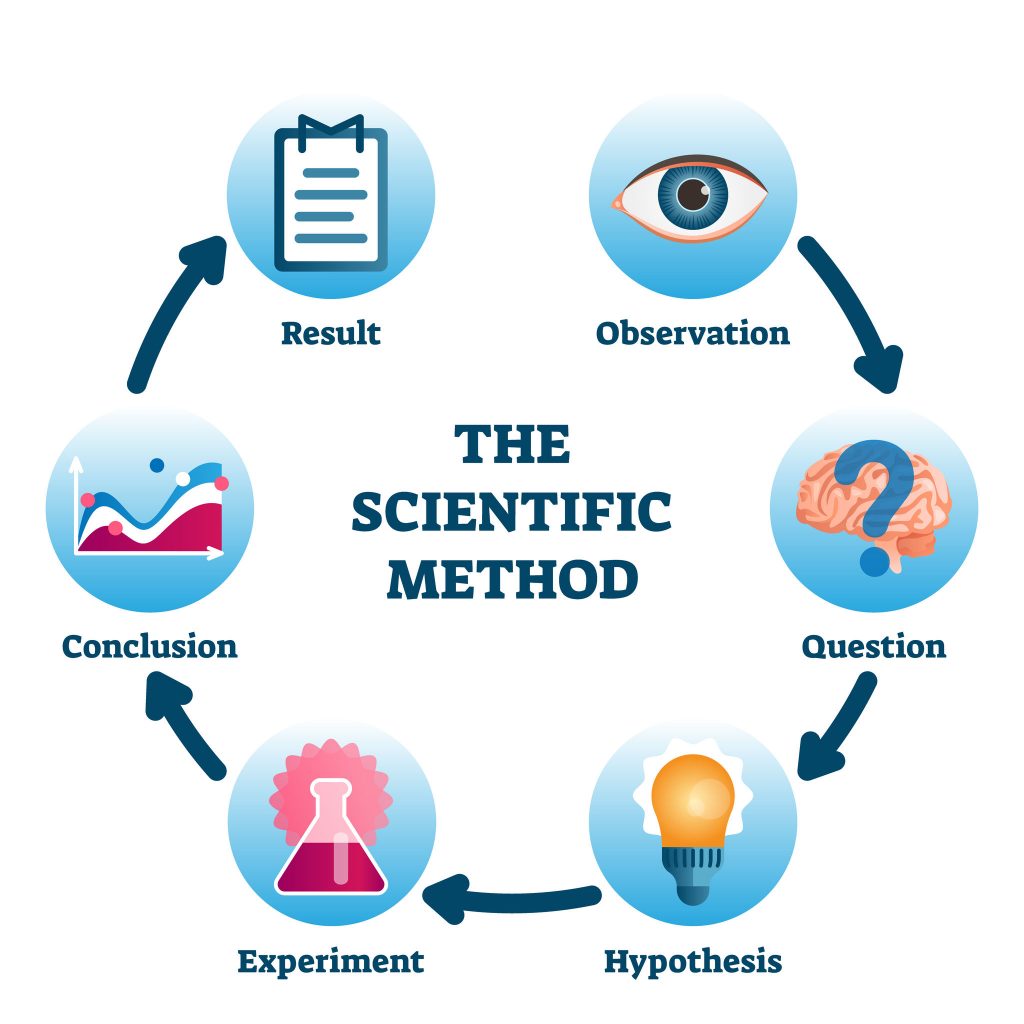
Science, scientific method, and scientific thinking
This work explores the fundamental foundations of scientific knowledge, analyzing the nature of science, the structure of the scientific method, and the principles of scientific thinking.