Resolving personal problems
On (almost) universal ways to solve personal problems.
Mindfulness and Essentialism: A Universal Solution to Personal Problems
Every day, millions of people buy productivity books, sign up for motivation trainings, and search for ways to force themselves into action. But why do most of these attempts fail? The problem isn’t a lack of techniques or willpower — it lies in misunderstanding human consciousness and the inability to separate what’s essential from what’s secondary.
Why Conventional Productivity Advice Fails
Open any popular productivity book and you’ll find standard recommendations: break tasks into subtasks, make to-do lists, prioritize. All these approaches ignore the main element — the person themselves. They boil down to “just do it,” but if people could “just get started,” they wouldn’t seek help.
The problem lies in psychological inertia and misdirected focus. People often confuse busyness with productivity. Chaotic task completion doesn’t lead to success. True effectiveness isn’t about doing more — it’s about achieving meaningful results.
Deterministic Understanding of Problems
The universe is a deterministic system where everything has causes. Most people seek reasons for their difficulties in the external world, but true understanding comes when we realize: the only meaning events have is the meaning we assign to them. Birth and death have no intrinsic meaning. Evil may go unpunished. Paradoxically, realizing this motivates people to improve and take action to change existing circumstances.
The Consciousness Revolution
It’s critically important to understand: you are not your brain, memory, thoughts, or emotions. Consciousness is what observes all these processes. This distinction between observer and observed underlies all effective self-development practices. When people identify with their stream of thoughts and emotions, they live on autopilot. The ability to detach brings profound calm and control.

Neuroplasticity and Training the Brain
Human personality is encoded in a quadrillion synaptic connections. Neurons that fire together wire together. Every thought increases its likelihood of recurring. The brain of someone with psychological problems is trained to respond to external factors with stress and anxiety. Thinking about problems can’t solve them — we must work not with the mind’s content, but with the mind itself.
Consumer Mindset as the Root Problem
Consumerism is dependence on external validation: the need for recognition, love, any external factors for happiness. A person craving recognition isn’t fundamentally different from an alcoholic — both depend on external sources for inner wellbeing. True happiness is awareness, not acquisition. It’s understanding that nothing in the world can cause your unhappiness. Happiness is a personal choice.
The Problem of Mental Health Gradations
People aren’t neatly divided into “healthy” and “unhealthy.” Mental states exist on a spectrum. Sleep disturbances from intrusive thoughts, concentration problems, depression — these are common issues rarely discussed. The “just do it” approach ignores this complexity and often proves ineffective.
Attention as the Most Valuable Resource
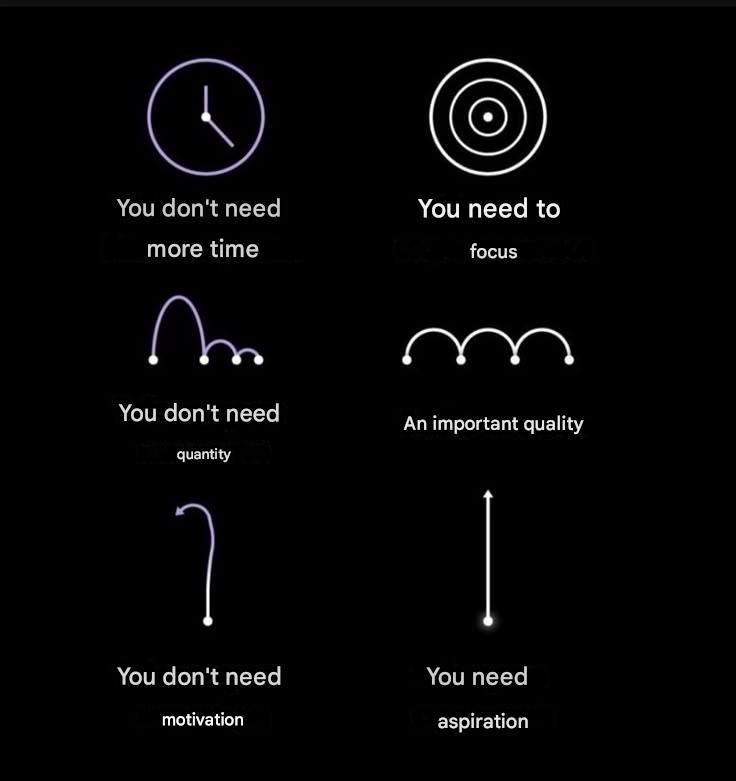
Attention, not time, is humanity’s most valuable resource. The ability to consciously direct attention is the only skill truly needed. Most people use only a fraction of their potential due to living on autopilot. But where should we direct this attention? This is where essentialism helps.
Essentialism: The Art of Choosing What Matters
If mindfulness is the ability to manage attention, then essentialism is the disciplined approach to determining where to direct it. This philosophy teaches focus on what’s vital while eliminating everything else. Instead of asking “How can I do everything?” essentialists ask “What truly matters?”
Core principles of essentialism:
- Do less, but better. Instead of 10 daily tasks, choose 1-2 key actions yielding maximum results.
- Learn to say “no.” Refuse elegantly and decisively anything misaligned with core goals. Remember: saying yes to trivial things means saying no to resources for what matters.
- Discern. Nearly everything we do is insignificant. Learn to distinguish the “trivial many” from the “vital few.” Apply the “90% rule”: if something isn’t an obvious “yes” (90%+ alignment), consider it a firm “no.”
- Make conscious choices. Don’t let circumstances or others’ requests control your time. If you don’t set your priorities, others will.
Essentialism isn’t about doing more — it’s about doing the right things.
Automaticity and the Devaluation of Life
Boredom arises when people see the world through learned categories. Automaticity makes people stop appreciating their surroundings — new experiences bring diminishing pleasure, life turns gray. The solution isn’t buying new things, but changing perspective through mindfulness practice and focusing on what truly matters.
Stress Management
In critical situations, take a deep breath and observe from a distance. Regular mindfulness practice increases the gap between stimulus and response. In a deterministic universe, anger toward others is pointless (they’re “empty boats”); accept reality calmly, then seek solutions.
Rationality, Emotions, and Goals
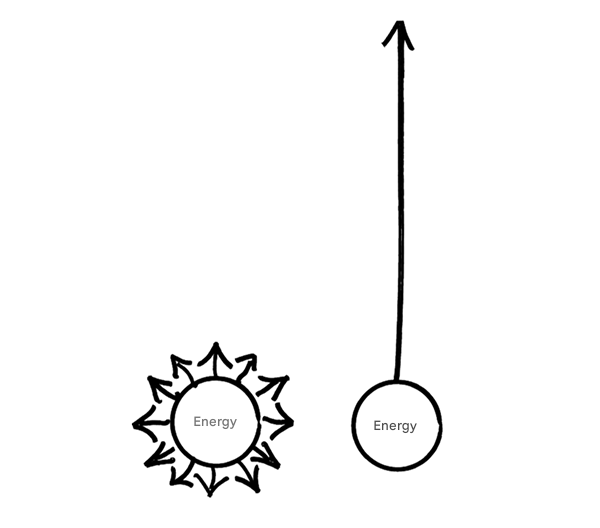
True rationality includes understanding human motives and emotions, plus effective interaction with the world. Extreme clarity of goals facilitates this. One clear, inspiring intention outweighs a thousand vague decisions. Goal clarity eliminates distractions and channels energy toward results.
Practice: Mindfulness and Essentialism
Mindfulness and essentialism are two sides of the same coin. Mindfulness gives control over your mind, essentialism provides the strategy to apply it.
- Formal mindfulness practice: Sit regularly in silence, training concentration (e.g., breath observation).
- Informal practice: Manage attention in daily life — during walks, work, conversations.
- Essentialism practice: Constantly ask: “Is this truly necessary?” “Does this advance my core goal?” Create buffers — time/resource reserves for unexpected events.
Starting is difficult, but it becomes habitual — like brushing teeth.
The Paradox of Simple Solutions and Suffering Separation
Complex problems often have fundamentally simple solutions, though the path isn’t easy. Crucially, distinguish physical suffering (inevitable pain) from psychological suffering we add through dramatization. The practice’s goal is to avoid adding this extra layer.
Conclusion: The Universal Solution
The answer to motivation, productivity, and life satisfaction has two parts:
- Study the system: Cultivate curiosity, broaden horizons, understand causality in the world and your own mind.
- Practice mindfulness and essentialism: Develop attention management and non-identification with thoughts, while disciplining yourself to focus only on what truly matters.
This isn’t a ready-made answer — it’s a recipe. Its ultimate purpose is helping you become more productive and satisfied, enabling effective pursuit of passions and creation of a more interesting world.
Related Topics

What is the brain and how do you use it?
About the processes that occur in the brain during thinking and learning, how our actions influence its development, how to control it, etc.

How to take care of your brain health?
A comprehensive guide to maintaining healthy thinking and mental well-being.