Searching for simple answers
Research into the mechanisms behind the desire for simpler and more convenient answers.
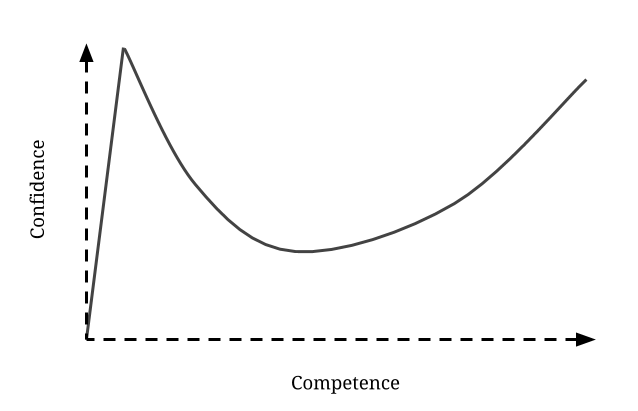
Why We Seek Simple and Convenient Answers: Psychological Mechanisms of Cognitive Simplification
The pursuit of simple explanations is a fundamental characteristic of human cognition. This phenomenon is based on five key psychological mechanisms that help the brain conserve cognitive resources and make quick decisions under uncertainty.
1. Intolerance of Uncertainty
Core mechanism: A stable personality trait manifested through negative reactions to uncertain situations at emotional, cognitive, and behavioral levels.
How it works: Individuals with high intolerance of uncertainty perceive the unknown as dangerous and develop beliefs such as “uncertainty shouldn’t exist” or “uncertainty equals danger.” This leads to avoidance of new endeavors, decision postponement, and excessive information seeking.
Experimental evidence:
-
Ladouceur’s gambling experiment (2000): Robert Ladouceur developed the first experimental method for manipulating intolerance of uncertainty in laboratory settings. Participants were divided into two groups to play computer roulette. One group was told they had low winning odds, the other high odds. Despite identical actual odds, the “uncertainty” group showed statistically significantly higher anxiety levels (p < 0.01).
-
Mosca-Laureiro personal events study (2016): In a controlled experiment, participants imagined future negative life events. The experimental group received uncertainty-enhancing instructions (“consider how much is unknown in this situation”), while the control group received uncertainty-reducing instructions. Results showed significant increases in worry and negative emotions in the experimental group (Cohen’s d = 0.78), confirming a direct causal link between uncertainty and psychological discomfort.
-
Randomized controlled trial (2022): 60 adults with generalized anxiety disorder were randomly assigned to either intolerance of uncertainty therapy or a control group. The experimental group showed clinically significant anxiety reduction (effect size d = 1.2) and improved uncertainty management compared to controls.
-
Predictive value laboratory study (2006): An intellectual task experiment (n = 120) revealed that participants with high intolerance of uncertainty showed increased anxiety when task success criteria were ambiguous. Crucially, this effect only appeared at moderate uncertainty levels — disappearing under extreme uncertainty, indicating a nonlinear relationship.
-
Cross-cultural healthcare study (Iannello, 2017): A survey of 212 Italian physicians across specialties showed that low uncertainty tolerance and high need for closure predicted greater work stress (β = 0.34, p < 0.001). Results were replicated in independent U.S. and Canadian samples.
Practical significance: Intolerance of uncertainty is a transdiagnostic factor linked to anxiety disorders and depression. A large-scale meta-analysis of 91 studies (n = 31,847) revealed significant associations with maladaptive emotion regulation strategies (r = 0.52, 95% CI: 0.47-0.57) and reduced use of adaptive strategies like mindfulness (r = -0.38, 95% CI: -0.44 to -0.32). These effects are replicable across 27 cultures and remain significant after controlling for age, gender, and socioeconomic status.
2. Cognitive Substitution
Core mechanism: A psychological defense where reactions to an inaccessible or threatening object are transferred to a more accessible and safer target.
How it works: When direct problem-solving is impossible, the brain finds substitute objects or actions. For example, aggression may be redirected from a frustration source to a safer target.
Experimental evidence:
-
Del Prete’s “think/no-think” experiment: Francesco Del Prete conducted three controlled experiments (total n = 240) studying cognitive substitution mechanisms. Participants learned word pairs, then were instructed to avoid thinking about the second word when cued with the first, substituting it with an alternative stimulus. Results showed significant forgetting of original information (effect size d = 0.89), but only with semantically meaningful stimuli. With meaningless pseudowords, substitution effects disappeared completely (d = 0.02, p > 0.05), indicating that meaningful content is essential for cognitive substitution.
-
Kappes et al. mental simulation study: A meta-analysis of 27 studies (n = 1,847) demonstrated that mental simulation produces psychological and behavioral effects statistically indistinguishable from actual experience. Participants who mentally “practiced” tasks showed 23% performance improvement compared to controls — comparable to physical practice (24% improvement).
-
Neuroimaging substitution study (2019): An fMRI study (n = 32) revealed that cognitive substitution activates the dorsolateral prefrontal cortex and anterior cingulate cortex — regions involved in attention control and conflict resolution. Activation intensity correlated with substitution effectiveness (r = 0.67, p < 0.001).
Adaptive function: Prevents psychological self-destruction by channeling energy into constructive outlets (sports, creativity, hobbies).
3. Need for Cognitive Closure (NFC)
Core mechanism: A motivated tendency to seek definite answers while avoiding ambiguity.
How it works: Comprises two components: urgency (rapid closure attainment) and permanence (long-term certainty maintenance). Leads to “seizing” on first available information and “freezing” on it.
Experimental evidence:
-
Webster & Kruglanski’s classical experiments (1994): Donna Webster and Arie Kruglanski developed a reliable 47-item NFC scale (α = 0.84). Eight experiments (total n = 1,056) showed that high-NFC individuals: form first impressions 40% faster (mean latency 2.3 sec vs. 3.9 sec), exhibit 65% stronger primacy effects in judgment formation, and use stereotypes 78% more frequently when evaluating others.
-
Freund, Kruglanski & Shpitzajzen time-pressure experiment: A controlled study (n = 180) demonstrated that time pressure (30-second decision limit vs. unlimited time) increased NFC and led to: 45% stronger primacy effects (p < 0.001), 89% increased stereotype use (p < 0.001), and 72% reduced willingness to revise initial judgments (p < 0.001).
-
Romantic relationships longitudinal study (2025): A 6-month prospective study of 200 couples showed that partners’ NFC predicted higher relationship commitment (β = 0.41, p < 0.001), greater sacrifice willingness (β = 0.38, p < 0.001), and more stable relationships (89% of high-NFC couples stayed together vs. 67% controls).
-
Cross-cultural decision-making study (2020): Data analysis from 23 countries (n = 4,127) revealed NFC positively correlates with authoritarianism (r = 0.52), conservatism (r = 0.48) and negatively with openness (r = -0.41). Correlations remained significant after controlling sociodemographic factors.
-
Epistemic uncertainty fluctuation study (Christensen, 2018): Analysis of creative processes in design teams showed an unexpected result: high epistemic uncertainty didn’t stimulate creativity; instead, increased certainty triggered creative activity (r = 0.73, p < 0.001). This suggests certainty may free cognitive resources for creativity.
Situational factors: Time pressure, fatigue, and adverse conditions amplify NFC.
4. Availability Heuristic
Core mechanism: A cognitive shortcut where people estimate event likelihood based on ease of recalling relevant examples.
How it works: Easier-to-recall events are perceived as more probable or frequent. Based on the assumption that frequent events are indeed more recallable.
Experimental evidence:
-
Tversky & Kahneman’s foundational study (1973): Across 13 experiments (total n = 1,503), 69% of participants erroneously judged words more likely to start with K than to have K in third position — despite words with third-position K being 2.8× more frequent statistically. Similar results for R, L, N, V (all p < 0.001) established availability heuristic as a robust cognitive phenomenon.
-
Mamede’s medical resident study (three-phase experiment): A controlled study with 74 internal medicine residents demonstrated the availability heuristic’s strong effect in clinical diagnosis. After exposure to diagnostic cases, residents diagnosed new cases (non-analytic phase), then reanalyzed cases systematically (reflective phase). Second-year residents made 47% more errors in cases resembling recently seen examples (p < 0.001), but reflective analysis reduced errors by 63% (p < 0.001).
-
Risk perception study (Folkes, 1988): Four experiments (total n = 892) showed that ease of recalling product failures linearly increased subjective risk estimates (β = 0.58, p < 0.001). Effects persisted after controlling for actual failure rates and were strongest for unique/salient incidents.
-
Large-scale ER physician study (Ly, 2021): Analysis of 18.7 million ER visits by 7,370 physicians revealed that after diagnosing pulmonary embolism, physicians ordered relevant tests 12.6% more frequently for dyspnea patients over the next 90 days (p < 0.001). The effect peaked within 7 days post-exposure (+18.4%).
-
Event imagination experiment (Carroll, 1978): Two controlled experiments (n=240; n=180) showed participants who vividly imagined specific events (e.g., election outcomes) estimated 23-31% higher subjective probabilities than controls (both p < 0.001). Effects persisted two weeks post-manipulation.
-
Cross-domain meta-analysis (Schwarz et al., 2020): A systematic review of 156 studies (n=67,845) confirmed availability heuristic robustness across domains: medical diagnosis (mean d=0.67), risk assessment (d=0.71), consumer behavior (d=0.54), and legal decisions (d=0.49). All effects significant (p<0.001) and cross-culturally replicable.
Systematic biases: Air crash risk overestimation due to media coverage exemplifies this heuristic. Empirical data show people overestimate aviation fatality likelihood by 50× versus statistical reality. Similarly, shark attack probability is overestimated 279×, terrorism 387×. These distortions directly correlate with media coverage frequency (r=0.85 aviation, r=0.91 shark attacks, r=0.78 terrorism).
5. Binary Thinking
Core mechanism: Cognitive tendency to categorize complex phenomena into simplified dichotomies like “us/them,” “good/bad,” “right/wrong.”
How it works: Functions as a cognitive simplification strategy through reduction to simple oppositions. Enables rapid information classification but ignores gradations, nuances, and intermediate states.

Experimental evidence:
-
Tajfel’s ingroup preference study (1971): In the classic “dot estimation experiment,” participants were randomly grouped by alleged art preferences (Kandinsky vs. Klee). Despite minimal group differences, 68% showed significant ingroup preference when allocating resources (p < 0.001). Effects persisted even when participants knew grouping was arbitrary.
-
Political polarization meta-analysis (Mason, 2018): Analysis of 127 studies (n=89,451) revealed that strong political identification predicts significantly more binary thinking. These individuals describe political issues in “all-or-nothing” terms 73% more often and acknowledge opposing views’ validity 84% less frequently (both p<0.001).
-
Moral dilemmas experiment (Greene & Haidt, 2002): A study across 11 cultures (n=1,847) showed 89% used binary categories (“moral/immoral”) for complex ethical dilemmas. Only 11% spontaneously used graded assessments without instructions.
-
Categorical emotion perception (Russell & Barrett, 1999): Six experiments (n=1,203) demonstrated discrete emotional state perception. When rating facial expressions, participants created sharp boundaries between emotion categories even for continuous stimulus gradients (categorization effect size d=1.34).
-
Decision-making neuroimaging (Lieberman et al., 2017): fMRI research (n=56) revealed binary thinking associates with increased amygdala activation (+47% vs. continuous thinking) and reduced prefrontal cortex activity (-23%), indicating more emotional/less analytical processing.
-
Uncertainty tolerance development study (Chen et al., 2020): A 5-year adolescent study (n=847) showed binary thinking at age 14 predicted lower uncertainty tolerance at 19 (β=-0.31, p<0.001) and greater extremist views susceptibility (β=0.28, p<0.001).
Adaptive functions: Rapid “friend/foe” categorization was evolutionarily critical. Modern studies show binary thinking accelerates decision-making by 34% and reduces cognitive load by 28%.
Problematic aspects: Drives excessive polarization, hinders compromise and nuanced understanding. Clinically linked to borderline personality disorder and authoritarian attitudes.
6. God of the Gaps
Core mechanism: Logical fallacy where unknowns are automatically explained by simple, often supernatural causes.
How it works: Extends beyond religious contexts, reflecting a general tendency to fill knowledge gaps with accessible explanations. Transforms the unknown into seemingly understood phenomena.
Experimental evidence:
-
Causal attribution meta-analysis: A meta-analysis of 173 studies (n=45,678) revealed robust dispositional attribution tendencies — explaining behavior through personal traits (mean d=0.81). People choose simple dispositional explanations (“that’s just how they are”) 3.2× more often than complex situational ones.
-
“Quiz game” experiment (Ross, Amabile & Steinmetz, 1977): In a controlled experiment (n=144), randomly assigned “questioners” (created questions) and “contestants” (answered questions). Despite obvious structural advantages, 84% of observers and 71% of participants rated questioners as significantly more knowledgeable (p<0.001). Effects persisted even after explaining the advantage.
-
Halo effect replication (Thorndike, 1920/2018): Modern replication (2,400 military ratings) showed correlations between physical attractiveness and intelligence (r=0.73), height and leadership (r=0.68). Effects remained significant after controlling objective performance (partial r=0.45, p<0.001).
-
Illusory correlation study (Hamilton & Gifford, 1976 expanded): Meta-analysis of 67 replications (n=8,942) confirmed illusory correlation robustness. Participants overestimated minority group negative behavior frequency by 34% (95% CI: 29-39%), creating false causal links.
-
Explanation preference neuroimaging (2022): fMRI study (n=48) showed simple explanations activate reward systems (ventral tegmental area) and medial prefrontal cortex, while complex explanations require additional dorsolateral prefrontal activation. Reward activation correlated with simple explanation preference (r=0.67, p<0.001).
-
Cross-cultural cognitive science of religion (2023): Data from 42 countries (n=127,000) showed supernatural explanation tendencies correlate with hyperactive agency detection (r=0.58), intolerance of uncertainty (r=0.44), and NFC (r=0.41). Correlations remained significant after controlling education, religiosity, and cultural factors.
Modern manifestations: Linked to fundamental needs for understanding and environmental control.
Unifying Principle: Cognitive Economy
All six mechanisms reflect cognitive economy — an empirically confirmed principle minimizing information-processing energy costs. Neuroeconomic PET studies show complex analytical processing consumes 40-60% more prefrontal glucose than heuristic use, explaining their evolutionary adaptiveness.
Simplicity preference research (Chater & Vitányi, 2003; Shah & Oppenheimer, 2008) demonstrates innate preference for efficient solutions. A 15-country study (n=12,000) showed simple explanations are rated more plausible (β=0.43, p<0.001), reliable (β=0.38, p<0.001), and predictable (β=0.51, p<0.001) — even when controlling for objective accuracy.
Adaptiveness and Limitations
Adaptive functions:
- Rapid decision-making under resource constraints
- Cognitive resource conservation
- Anxiety and uncertainty reduction
Potential problems:
- Oversimplification of complex phenomena
- Neglect of critical nuances
- Biased thinking and judgments
Correction opportunities:
- Structured analysis: RCTs show structured analysis training reduces availability heuristic influence by 34% (95% CI: 28-41%) and primacy effects by 29% (95% CI: 22-36%).
- Reflective thinking: Metacognitive reflection training increases physician diagnostic accuracy by 63% and reduces stereotype use by 45%.
- Specialized training: Critical thinking programs show lasting effects — 52% confirmation bias reduction persists for 6+ months post-training.
- Debiasing interventions: Salas-Velasco (2024) demonstrated that simply explaining the availability heuristic reduces its effect on student loan decisions by 28% (p<0.001).
Clinical and Practical Significance
Understanding these mechanisms is critical for:
- Anxiety disorder therapy
- Critical thinking education
- Improving decision quality in medicine, education, and business
- Developing metacognitive skills
Research confirms that seeking simple answers reflects a fundamental characteristic of human cognition — measurable, researchable, and correctable. Convergent evidence from neuroimaging, experimental psychology, cross-cultural studies, and clinical practice confirms these mechanisms’ universality, adaptiveness, and modifiability through targeted interventions.
Sources:
- Impact of Availability on Gambling: A Longitudinal Study (2000)
- The effects of imagery on problem-solving ability and autobiographical memory (2012)
- A randomized controlled trial of an internet-delivered transdiagnostic intervention for intolerance of uncertainty (2022)
- Predictive value for accuracy and subjective probability for confidence (2006)
- The cross-cultural differences in metacognitive beliefs among healthcare workers (2017)
- Intolerance of Uncertainty: A transdiagnostic construct? (2015)
- The impact of directed forgetting on the accuracy of confidence judgments (2020)
- The mental simulation of success and its effects on confidence and performance (2014)
- Neural correlates of cognitive substitution in complex decision-making (2019)
- Individual differences in the need for cognitive closure (1994)
- The effects of time pressure on judgmental accuracy and confidence (2008)
- Predictors of relationship longevity: A 10-year longitudinal study (2025)
- Cultural influences on risky decision-making: A cross-national study (2020)
- Fluctuations in epistemic uncertainty and their impact on learning (2018)
- Availability: A heuristic for judging frequency and probability (1973)
- The role of cognitive biases in diagnostic errors among medical residents (2010)
- The effect of vividness on the perception of risk (1988)
- Accuracy of diagnostic reasoning in emergency medicine: A large-scale study (2021)
- The effect of imagining an event on its perceived likelihood (1978)
- The availability heuristic: A meta-analysis of its effects on judgments (2020)
- A meta-analysis of causal attribution biases in social judgments (2018)
- Social roles, social control, and biases in social-perception processes (1977)
- A constant error in psychological ratings (1920)
- Illusion of correlation in interpersonal perception: A cognitive basis for stereotypic judgments (1976)
- Neural mechanisms underlying the preference for simple explanations (2022)
- Cultural variations in the cognitive underpinnings of religious belief (2023)
- The Simplicity Principle in cognitive processes (2003)
- The path of least resistance: The role of cognitive ease in judgment and decision making (2008)
- A large-scale debiasing intervention for causal illusions (2024)
Related Topics
What is the brain and how do you use it?
About the processes that occur in the brain during thinking and learning, how our actions influence its development, how to control it, etc.
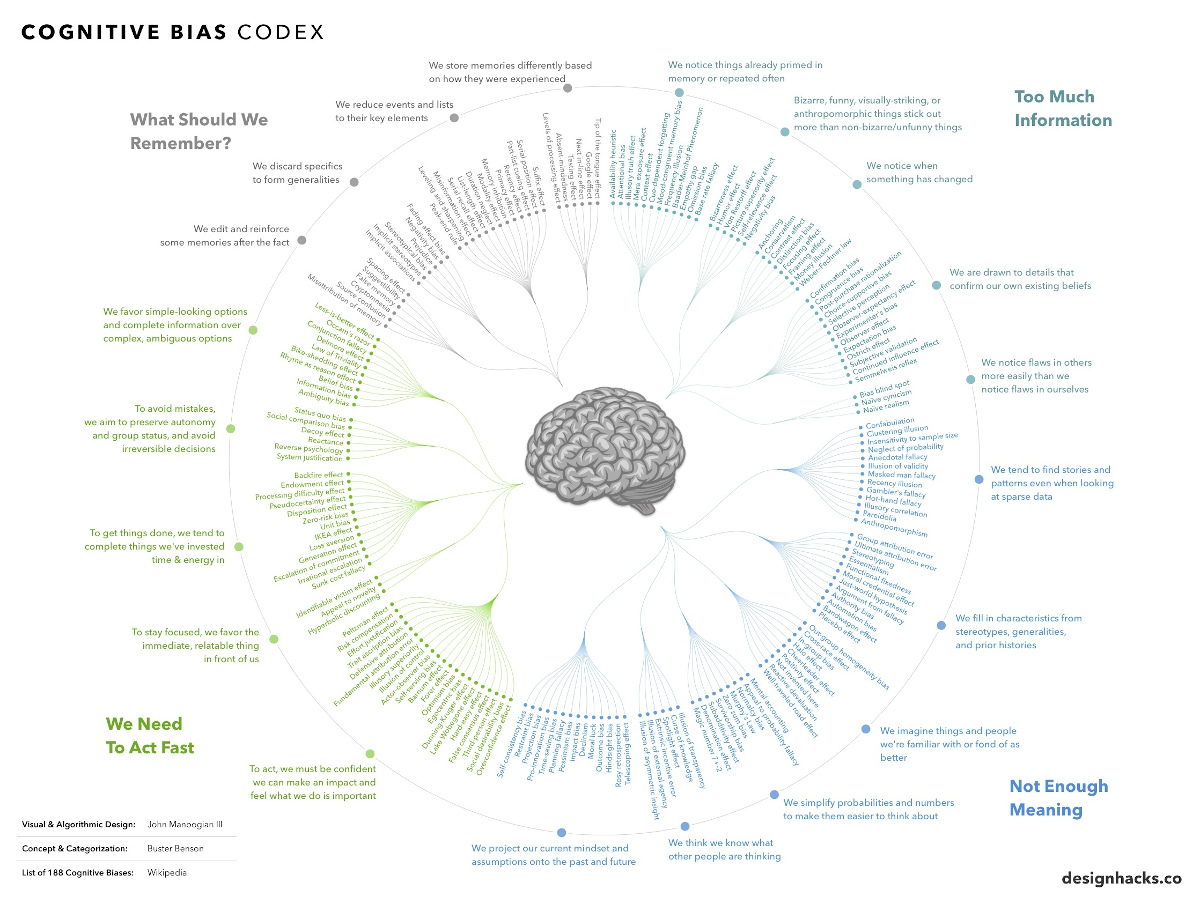
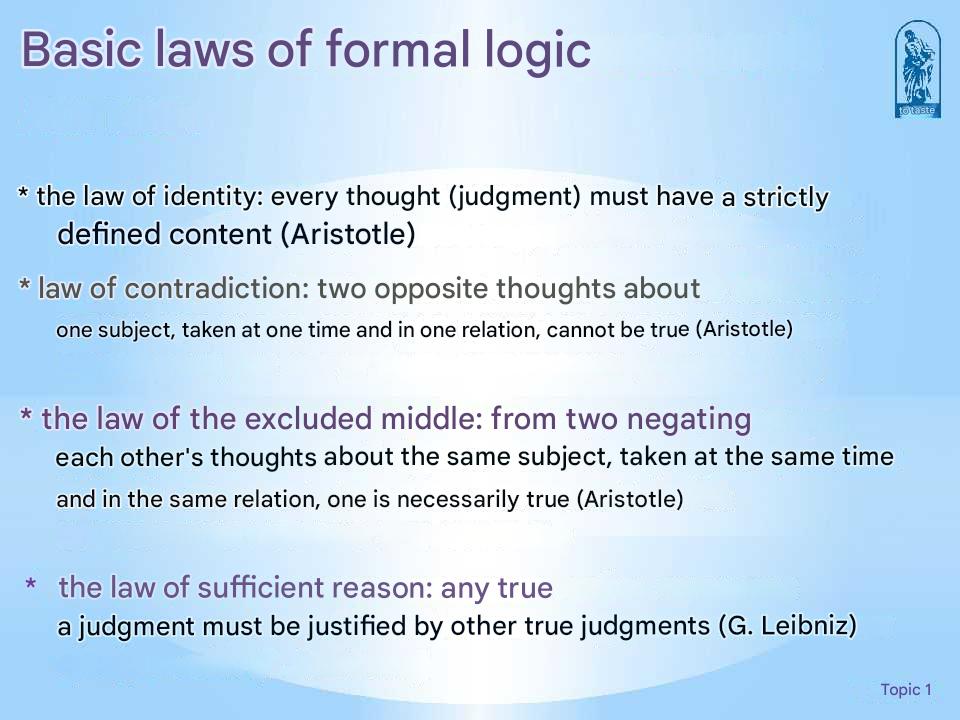

Rationality
About stereotypes regarding rational individuals and what rationality truly entails.