Relativity
On the fundamental aspect of rational thinking, and not just Einstein's theory — relativity.
The Relativity of Perception
Introduction
“We cannot describe the world. We can only describe what we perceive through our receptors” — these words accurately reflect the essence of the relativity of perception. Every living organism, every observer perceives reality through the prism of their biological limitations, cultural experience, and physical conditions of existence. What we accept as absolute truth is actually only our interpretation of the surrounding world, based on an extremely limited set of sensory data.
Physical Foundations of Relativity
Gravity and Size
Imagine a planet with gravity six times higher than Earth’s. If your leg weighs 45 kilograms here, there it would weigh 270. Simple movement would turn into exhausting struggle. Muscles and skeleton, necessary for survival in such conditions, would be massive. All architectural solutions are subordinated to the pressure of weight: wide foundations, low buildings, absence of tall structures.
For beings from such a planet, our skyscrapers would seem like a violation of the laws of physics. They wouldn’t understand how we can jump, run, dance. For them jumping up would be like us jumping two meters up from a standing position, but ten times heavier. Their physiology would be adapted to constant resistance to downward pressure: thick legs, shortened bones, developed lumbar and neck muscles.
Conversely, on a planet with reduced gravity (for example, on the Moon, where it’s six times less than Earth’s), everything becomes lighter. A person can jump higher, objects fall slowly, and even gait becomes uncertainly “bouncing”. If we had grown up in such conditions, our skeleton would be more fragile, and musculature — weaker. We would consider “normal” to hover in the air with each step. For an alien from the Moon, Earth would be a monstrously heavy planet, where every movement is torture.
Gravity dictates body shape, environmental architecture, pace of movement, and even the boundaries of thinking. What seems “natural” to us exists only within the framework of specific conditions of attraction and biomechanics.
Scale and Speed Perception
In physics, there exists a disproportionate relationship between body size and ability to accelerate. The greater the mass of an organism, the slower it moves relative to its size. This is related to the cubic dependence of mass on linear dimensions, while muscle strength grows only proportionally to cross-sectional area.
-
Dinosaurs weighing several tons couldn’t run — only accelerate over short distances. Their legs wouldn’t withstand prolonged stress at high speed. Their muscles couldn’t provide the necessary impulse.
-
An ant, conversely, can develop speeds up to 100–200 “body lengths per second” — in human equivalent, this is the speed of a sports car. But we don’t see this as a “mad race” because our scale is different.
The same applies to lizards, geckos, hummingbirds — they all act at high speeds, but in their scale. If such a lizard were “enlarged to human height”, its muscles would no longer be able to support the same amplitude of movements. The physics of resistance, inertia, energy output would change the picture — it would become “sluggish”.
This also applies to the hypothetical scenario of shrinking a human. If we were reduced ten times, a loaf of bread would become a year’s supply, and food digestion time — much shorter. But at the same time a cat would become like a tiger for us, and a rat — like a wolf. Size is not only anatomy, but also interaction with surrounding risk. Even our way of interacting with danger — running, defense, hiding — is rigidly connected to body proportions and gravity.
Temporal Perception
Time perception is also not the same for all living beings. It is directly related to the frequency of sensory information processing and reaction speed. Creatures with fast metabolism (small animals, insects) perceive more events per unit of time — as if “slowing down” the world around them.
-
If you lived one-tenth of a second, the sea would seem absolutely motionless, trees — frozen, air — unmoving. The world has stopped. Everything that requires time — speech, movement, gesture — would become invisible. Your “life” would pass between two atomic oscillations.
-
Insects living mere days perceive movement slowly and in detail. A flying ball for them is not a blurred spot, but an object full of events, whose movement they can analyze in detail. Their vision works at higher frequency — more “frames per second”.
This phenomenon is known as temporal resolution of perception. In flies, for example, it is 4–5 times higher than in humans. This explains why flies are so hard to catch — while we see only the beginning of movement, it has already analyzed it and managed to react.
In humans, temporal perception is also plastic. Under the influence of stress, adrenaline, panic, or strong concentration, the brain can “slow down” subjective time flow. During accidents or injuries, many people describe how everything “stretched out”, each movement became detailed. This is not an illusion, but the result of attention overload and accelerated memory fixation.
Conclusion: space, time, speed, and even the very “materiality” of the world — are perceived differently depending on body size, gravity, and nervous system. A creature living 3 days and having a mass of milligrams perceives a completely different universe than a human. None of these universes is “more correct” or “more real” — they are simply different.
Biology of Relativity
Sensory Differences
Humans perceive the world through sense organs, but these organs are not universal and not absolute. Their work is possible only within certain ranges and under certain conditions. We say we “see”, but in complete darkness we see nothing. We believe we “hear”, but with a ruptured eardrum, the sound picture disappears. A cold muffles smells, pressure or illness can completely change taste perception. Sense organs are not guaranteed — they are situational.
This is also true for other living beings. A mosquito can calmly walk on water — its mass is so small that the surface tension force of the liquid exceeds the force of gravity. An ant falling from the fiftieth floor won’t be killed — air brakes its fall. For it, gravity is felt differently. Our “natural” reasoning about the surrounding world would be simply incomprehensible to it.
Humans are not the measure of all things. The spectrum they can see is only a narrow strip between ultraviolet and infrared. The range of audible frequencies is a narrow interval between infrasound and ultrasound. Many animals possess sensory abilities that humans lack entirely: bats use echolocation, sharks sense electromagnetic fields, snakes see infrared heat, and pigeons feel Earth’s magnetic field. Everything beyond human receptors is, for them, imperceptible non-being, until translated into accessible form by instruments.
Even within the human species — sensory perception is not uniform. It is formed under the influence of many factors: from differences in receptor structure to differences in experience, culture, emotional state. As a result, the world is felt differently by everyone. We don’t just look with different eyes — we live in different sensory realities.
Receptor Physiology
Sense organs are not standardized sensors. Their structure, sensitivity, and response are unique for each organism. Even the smallest differences in anatomy can radically change perception.
- Color Vision:
In the human eye, three main types of cones work — sensitive to blue, green, and red portions of the spectrum. But their distribution and sensitivity are different in different people. The same object may seem intensely purple to one person, and bluish-gray to another.
This manifests visually in arguments about the “blue-black” or “white-gold” dress — the brain interprets the same light data differently.
Some people have a fourth type of cone — tetrachromacy. They see additional shades unavailable to most. This phenomenon is more common in women, thanks to inheritance peculiarities. The opposite situation — color blindness, more common in men, limits shade discrimination.
Color is not a property of an object, but a function of the sensory system’s work.
Interesting fact: all people have a “blind spot” in their eye. This is an area on the retina that is not sensitive to light. In the picture below, you can check this yourself. Close your right eye and look with your left at the right cross. The left cross will disappear at a certain distance.

-
Taste Perception:
Taste receptors are located on the tongue, but their quantity and distribution vary by tens of times. In “supertasters”, tastes are incredibly saturated, while in “non-tasters” they are muffled or barely noticeable. Genetics determines how susceptible a person is, for example, to bitterness.
Example: the substance PROP (6-n-propylthiouracil) is disgustingly bitter for some, almost tasteless for others.
Even ordinary products like broccoli or radish can cause sharply opposite reactions. The same chocolate may seem “too sweet”, “too bitter”, or “perfect” — and this is not pickiness, but differences in receptor biochemistry. -
Hearing:
The ability to hear depends on many parameters: ear shape, auditory canal length, inner ear structure. Different people have different sensitivity to volume and frequency.
Someone can distinguish ultra-fine nuances of sound (musicians, sound engineers), while someone doesn’t hear high-frequency sounds, like the “beeping” of chargers. Some old TVs emitted sounds at frequencies above 16 kHz — children heard them, adults didn’t. With age and under the influence of noise, the perception range narrows.
The Brain — Interpreter
Even if two people have identical sense organs and receive absolutely identical sensory signals, their internal perception can be fundamentally different. This happens because receptors are only input. The main processing stage is brain interpretation, and it is always subjective, variable, and deeply individual.
The brain is not an objective video camera recording surroundings. It is an active reality constructor that fills gaps, ignores “excess”, imagines, simplifies, suggests, deceives. This is an adaptive mechanism sharpened not for accuracy, but for utility in wild nature conditions that promote survival.
1. Context, Expectations, and A Priori Hypotheses
The brain always uses previous experience to predict what we will see, hear, or feel. It works on the hypothesis principle: “What am I most likely perceiving now?” And then compares incoming signals with expected patterns.
-
Classic example: the dress thedress.
The same photograph is interpreted by some as blue-black, and by others as white-gold. The difference is in the brain’s assumption about lighting: daylight (neutral) or shadow (cold). The brain corrects colors according to presumed light temperature.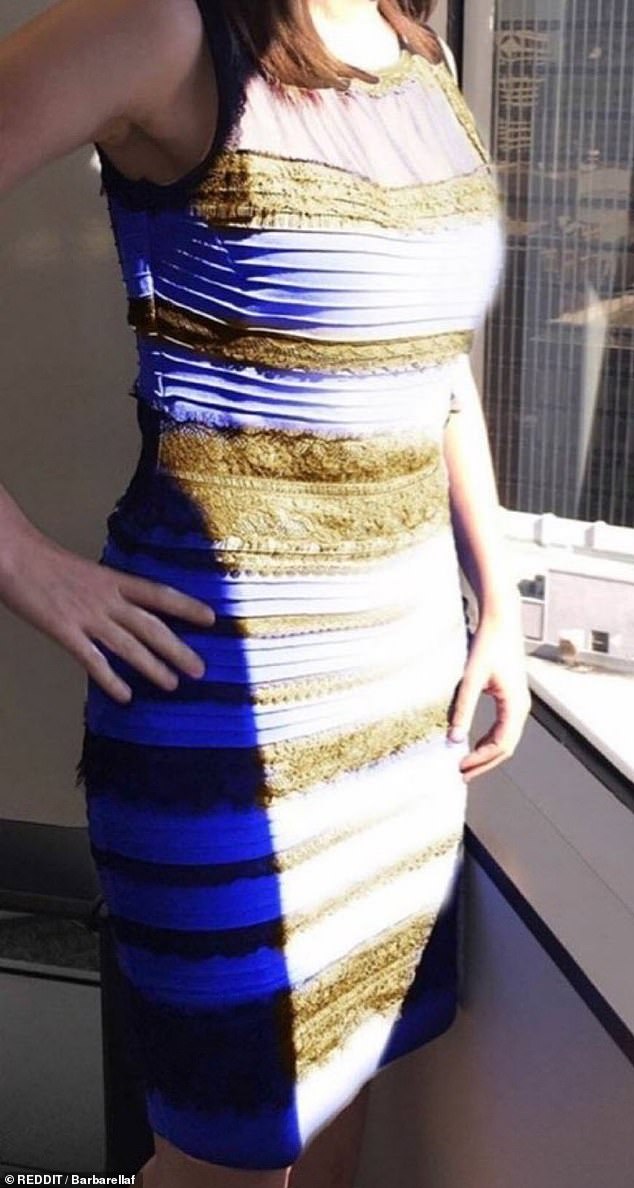
-
Expectations also affect taste:
If a person is told that food is expensive, “from a restaurant”, taste is automatically perceived as more refined. In blind testing, differences disappear. The same with wine, coffee, and chocolate. Linguistic labels modify neural interpretation.
2. Cultural and Individual Experience
Perception is not only physiology, but also the result of accumulated experience. Culture, language, learning, and habits form our “sensory map”.
-
Tastes:
A European might consider Thai food “unbearably spicy”, while for a Thai resident it’s normal. The same level of capsaicin (the substance causing burning) causes different reactions: physiology is the same, but tolerance and cultural norm are different. -
Smells:
Fermented fish (surströmming, jeotgal, fish with durian) is a delicacy for some, unbearable stench for others. A dish smelling “moldy” like cheese can cause salivation in a gourmet and disgust in an unprepared person. -
Colors:
In some cultures, white is the color of purity and life, in others — of mourning and death. Even basic color categories differ: Japanese traditionally doesn’t distinguish between green and blue (“ao”), while Russian distinguishes between dark blue and light blue, and English doesn’t.
3. Emotional and Physiological State
Our internal state — anxiety, joy, fatigue, stress — literally changes world perception.
-
Colors:
In depression, colors may seem dull, gray. In states of love or euphoria — conversely, the world is perceived as brighter, more “alive”. -
Taste:
During illness or taking certain medications, taste can be distorted or dulled. Emotions also affect: if you’re angry, food taste may seem “different”, even if it hasn’t objectively changed. -
Time and Space:
During fear or stress, time perception slows down. This is not an illusion, but an effect of high-density memory recording — the brain “enhances” fixation of what’s happening, as if making more frames per second.
4. Synesthesia — Extreme Form of Cross-Interpretation
Some people have cross-activation of sensory areas — for example, sound evokes color (colored hearing), taste — shape, and numbers are perceived as textures.
-
Numbers can have “taste” — for example, five seems salty, and seven — sour.
-
Musical notes can have a specific color — C major “yellow”, A minor “blue”.
-
Letters can feel warm or prickly, soft or heavy.
Synesthesia is not a disease, but an alternative style of perception where the brain builds unusual but stable sensory associations.
Differences in Time and Movement Perception
When we look at a rotating fan, we see a blurred spot. The blades merge into a solid circle — our eye and brain don’t have time to fix each object position. But if we use a stroboscope that briefly flashes at a certain frequency, we can “freeze” the moment — and see each blade separately. This effect shows the limits of our vision’s temporal resolution.
Different living beings perceive the flow of time not equally — this is related to how quickly their nervous system can process sensory signals.
-
For example, a fly perceives up to 250 frames per second, while humans — about 60. What for us is fast movement, for it is slow unfolding of events. In our eyes, a fly “reacts instantly”, while from its point of view, it simply calmly flew away from an approaching hand.
-
Scientists measure this using the “critical flicker fusion frequency” (CFF) indicator. In humans, it’s on average 60 Hz, in birds — can reach 100–120 Hz, in flies — up to 250 Hz. This means a bird in flight can see the tiniest environmental changes that for humans merge into a continuous picture. For a predatory bird like a falcon, this is literally a matter of survival: noticing the slightest mouse movement from height.
-
Animals with slowed metabolism and slow nervous systems, like turtles, have the opposite: they perceive movement slowly. Fast movement for them is almost like a flash, indistinguishable and frightening.
Such differences exist between humans too. In athletes, especially those trained in sports with fast reactions (tennis, boxing, auto racing), temporal perception resolution can be above average. In critical situations — for example, during an accident or fight — many people experience a “slowed time” sensation. This is not an illusion, but an effect of increased information processing density by the brain under adrenaline influence. It begins to intensively record and analyze everything happening, increasing the subjective duration of the event.
Time neurophysiology is not fixed. We are not “clocks”. Our brain itself “creates” subjective duration. Five minutes of waiting in boredom and five minutes of conversation with an interesting person are perceived completely differently — though objectively identical. The same happens with movement: smooth ice gliding under a figure skater’s skates or sharp falling in underwater filming are perceived differently not only because of visual image, but because of how we organize temporal perception patterns.
Thus, what we call “fast” or “slow” are not objective qualities of reality, but subjective categories determined by our nervous system properties. The world for an ant, bat, bird, or human flows at different speeds. Even within one species, time perception is not unified — it changes depending on organism state, training, emotions, attention, and biological differences.
Each brain has its own clock, and none of them coincide absolutely.
Thus, the brain is not a screen, but a screenwriter and director. It doesn’t “show” reality, but assembles it from data fragments, guesses, patterns, memory, and emotions. Even if two people look at the same picture, smell the same scent, or listen to the same melody — the internal experience will be different. Everyone lives in their own version of reality, built by their body and mind. The more we understand about these differences, the clearer it becomes: objective perception is a myth, and “normal perception” is only a statistical approximation.
Cultural Relativity
Traditions and Values
Every person tends to consider their culture normal by default, because they grew up and formed in it from childhood. This environment sets not only language and manners, but also thinking models.
-
Someone who grew up in France, where wine and moldy cheese are served for lunch, might be surprised by a country where alcohol is banned and cheese is considered spoiled.
-
A person from Alaska, entering a megacity, might consider city chaos a sign of madness. And a megacity resident, finding themselves in tundra, would think “there’s nothing there”.
-
A Greek who says: “I love Greek music, but can’t listen to anything else,” is not lying and is not mistaken. They haven’t “compared and chosen”, they are saturated with this environment from birth, it became part of them.
Cultural norms program preferences, tastes, and even perception of sound, rhythm, gestures. A drum beat that evokes delight in one culture might seem aggressive or ugly in another. In one tradition, tears express strength, in another — weakness. All this — not objective behavioral properties, but social constructions that a person absorbs like a sponge.
Behavioral Patterns
What is considered “polite”, “appropriate”, or “acceptable” depends not on reason or morality, but on historically formed norms, often unconsciously inherited.
-
In the early 20th century, it was accepted that a man should tip his hat when meeting a lady, open the door for her, and stand if she enters the room. This was perceived as etiquette and respect. Today, such gestures might be interpreted as paternalism or gender domination.
-
In Japan, it’s not customary to touch the interlocutor, even shake hands. In Latin America, touches are a normal part of communication. The same gesture in one context is friendliness, in another — unacceptable intrusion.
-
In the Middle Ages, public execution was normal. Today it’s perceived as barbarism. Meanwhile, in some countries, capital punishment continues to be used and is considered “just”.
Ethics and behavioral norms are temporal and geographical conventions. There’s no universal answer to “what is right”. One can only say: at this time, in this society, this is accepted.
Cultural Perception Distortions
Culture influences not only how we behave, but also what and how we notice.
-
In Western culture, visual scenes usually focus on the central object. In Eastern cultures, attention is distributed across the background — important is not the figure, but context. This is confirmed even in eye movement experiments.
-
People from high-hierarchy cultures (e.g., traditional Asian societies) are more inclined to accept authority without criticism. While in cultures with horizontal structure (e.g., Scandinavia) doubt and discussion are social norms.
-
The concept of “personal space” varies: in the USA — about a meter, in Japan — more, in Arab countries — noticeably less. What one considers friendly closeness, another might perceive as boundary violation.
Thus, culture is a perception filter that invisibly shapes not only behavior, but the very structure of how a person comprehends reality. And since thousands of cultures exist, there are just as many perceptions of “normality”.
The Danger of Absolutization
When people begin searching for “absolute truth”, they stop learning. It seems to them that their measurements are reality.
Even our ideas about animal behavior are often projections. We say a peacock spreads its tail “to attract females”, that fish gather in schools “to appear bigger to sharks”. But this is human interpretation — we attribute our motives and goals to animals.
Conclusion
We live in a trap of time and society. Our perception is limited by our receptors, our culture, our physical capabilities. Recognizing the limitations of our senses and subjectivity of our judgments, we can better understand the world and each other.
Absolute truth doesn’t exist not because the world is chaotic, but because each observer sees only part of the whole through the prism of their unique limitations. This is not cause for despair, but an opportunity for more accurate assessment of ourselves, people around us, and the world as a whole.
Relativity reminds us that any understanding we have is a map, not territory, and this map can and should always be refined. This makes our journey through reality not only more conscious, but infinitely more interesting.
Understanding relativity helps avoid absolutist judgments. Instead of “this is good” or “this is bad”, it’s better to ask: “Under what conditions does this work? For whom is this true?”
Remember: we cannot know how the world is “really” arranged — we can only know what we perceive. And this perception is always relative.
Related Topics
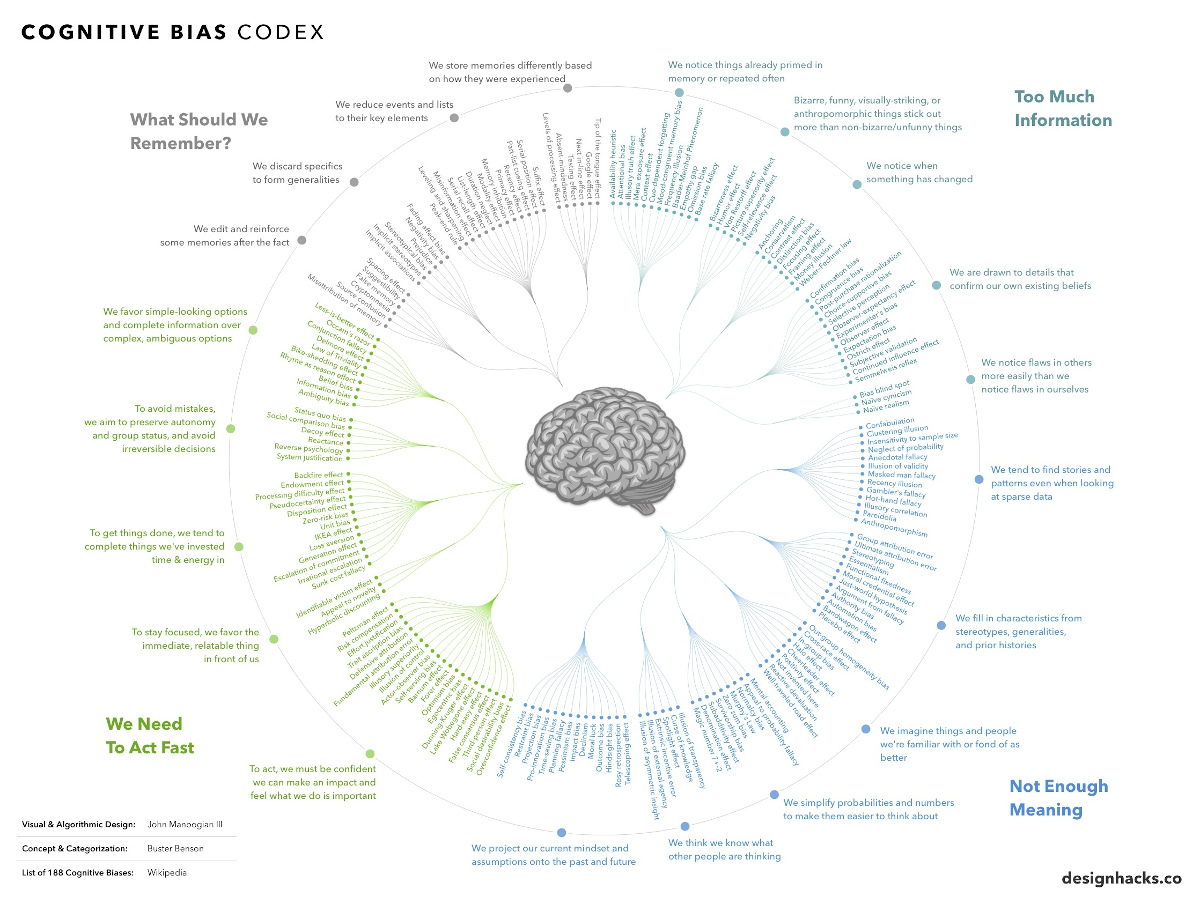
What is the brain and how do you use it?
About the processes that occur in the brain during thinking and learning, how our actions influence its development, how to control it, etc.
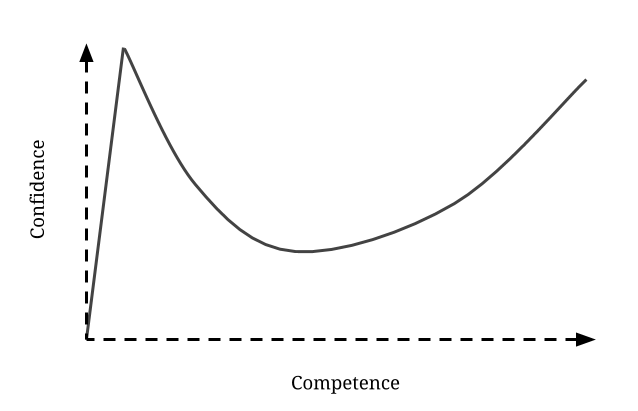
Accuracy of knowledge
Why do we often overestimate the depth of our knowledge and other aspects of our cognitive abilities?
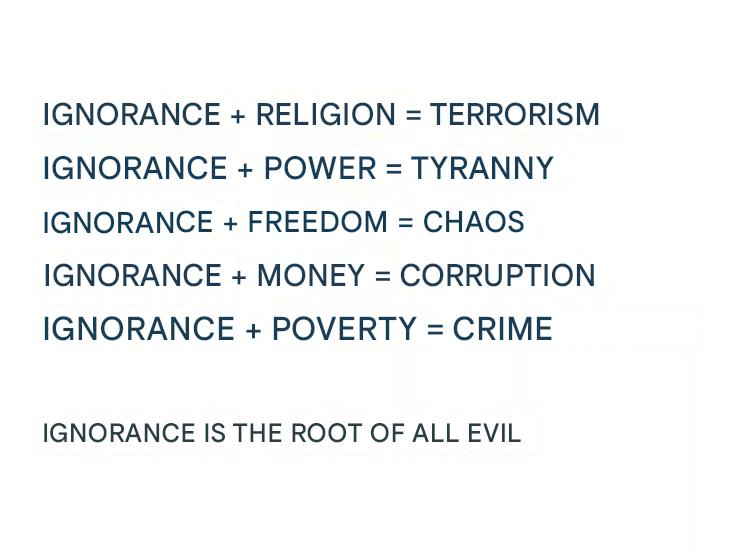
Rationality
About stereotypes regarding rational individuals and what rationality truly entails.
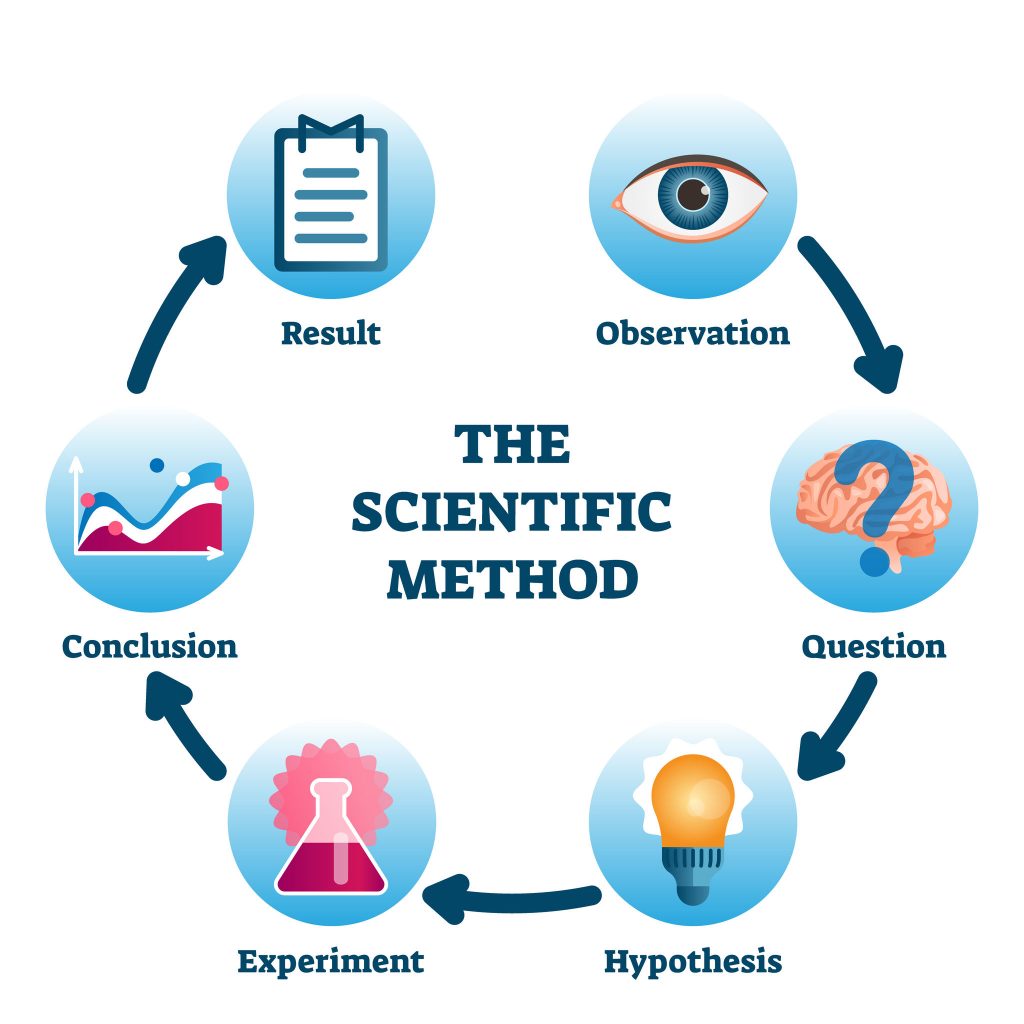
Science, scientific method, and scientific thinking
This work explores the fundamental foundations of scientific knowledge, analyzing the nature of science, the structure of the scientific method, and the principles of scientific thinking.