Language
What is language really, and what forms does it take?

Language as a Tool for Behavioral Influence
Core Concept
The primary function of languages is to influence behavior, not to transmit information. However, reproducing sounds represents only one of many ways to affect the behavior of others.
Biological Foundations of Linguistic Behavior
Visual Signals in the Animal World
Bears, spiders, cats, and other animals rear up on their hind legs or raise their hackles because this influences the decisions made by other animals. This is due to the fact that for many species, size is associated with danger. This is an example of visual language shaped by evolution. Similar demonstrative postures can also be observed in primates, including humans. Squared shoulders, straight posture, wide gait — these are all elements of nonverbal dominance language that we use intuitively.

Manipulative Behavior of Domestic Animals
Domestic animals use the mechanism of “making eyes” or “pressing on pity.” It seems to people that they voluntarily feed their pet, but in reality, the pet manipulates their behavior. Over time, animals memorize the pattern between facial expressions and the owner’s reaction. Interestingly, some species have evolved specifically for interaction with humans. Dogs, for example, have developed a unique ability to understand human gestures and facial expressions, which is absent even in their closest relatives — wolves.
Evolutionary Logic of Sound Signals
If some species makes strange sounds, then probably thanks to them it survived, since this affects the behavior of the environment. If this influence contributed to death, such a species would most likely not exist. For example, chicks that don’t cry loud enough cannot influence their mother’s behavior and risk dying of hunger. This principle also explains human infant crying — it evolved as the most effective distress signal that is impossible to ignore. The frequency of infant crying matches the frequencies to which human hearing reacts most acutely.
Body as a Linguistic Tool
Aposematism and Warning Signals
In biology, aposematism represents a genetically embedded reaction of animals to bright contrasting colors as a sign of toxicity and danger. Predators attacked poisonous frogs with bright coloration, but ordinary colors are difficult to remember due to their prevalence in nature. Associations developed more effectively when encountering colorful poisonous individuals, which over time were less frequently attacked and increased their population. Modern safety technologies use the same principles — bright warning signs, sirens with specific frequencies, flashing lights. We instinctively create warning systems based on millions of years of evolutionary experience.
Reproductive Signals and Evolutionary Trade-offs
Bright colors and patterns on animal bodies serve the function of increasing reproductive success. Some fish die more often due to bright coloration (easier for predators to detect), but at the same time mate more frequently, increasing population growth proportionally to its decrease from predator attacks. In humans, a similar mechanism manifests in fashion, cosmetics, tattoos, and other forms of bodily modification. We spend significant resources on appearance, often risking health (high heels, heavy jewelry, surgical interventions), which demonstrates the power of reproductive signals.
Human Peculiarities
Humans possess the greatest range of possible behavior among all known organisms and the ability to develop conditioned reflexes based on environment. Nevertheless, we rely on innate mechanisms, such as the ability to remember human faces. Neuroscience shows that we have specialized brain areas for face recognition (fusiform face area), which confirms the evolutionary importance of social interaction for human survival.
Alternative Communication Channels
Chemical and Tactile Signals
Language can manifest through smell, taste, or touch. Aromas evoke powerful associations, and tactile signals (for example, a friend’s pinch at an inappropriate moment) create an immediate connection between physical sensation and context. Ants have many pheromones that influence colony behavior. Modern research shows that humans also use chemical communication — we can “sense” fear, aggression, or attractiveness of other people through barely perceptible odors. The perfume industry exploits these ancient perception mechanisms.
Limitations of Manipulative Influence
Only animals with a certain set of characteristics, which collectively are attractive to us, can manipulate human behavior. This principle explains the phenomenon of “baby schema” (Kindchenschema) — large eyes, round cheeks, disproportionately large head evoke instinctive care in us not only toward human infants, but also toward animal young, cartoon characters, and even some design objects.
Complexity of Verbal Language
Problems of Abstraction and Interpretation
With words, the situation is more complex for several reasons:
-
Abstract concepts: We have created many words without direct physical referents — concepts like “justice,” “beauty,” “meaning.”
-
Multifactorial perception: One word can be colored by emotions, intonation, volume, facial expressions, the listener’s physical state, and other associative factors.
-
Polysemy of words: We also have many words whose meaning depends on context, and the name of the word itself often has no relation to its meaning.
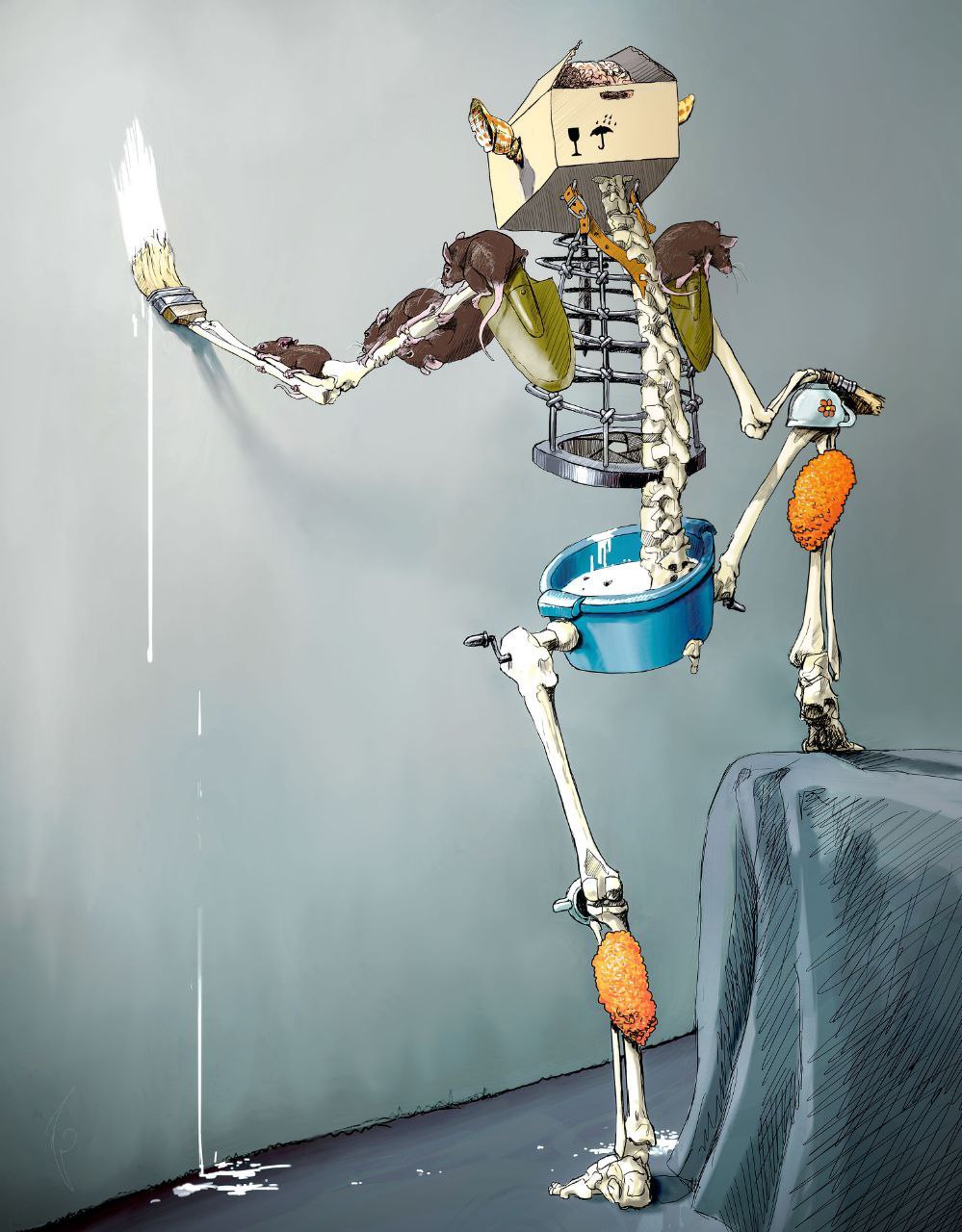
People often use words that don’t correspond to the meaning they want to convey.
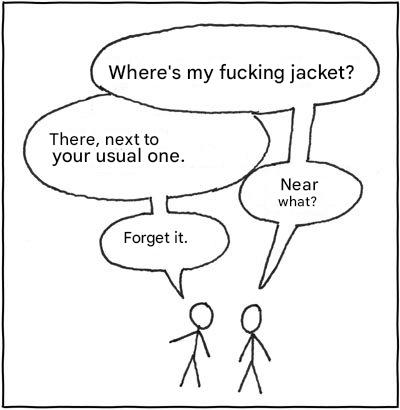
Modern linguistics distinguishes the pragmatic level of language — how context influences meaning. The phrase “Nice weather” can be sincere joy, sarcastic assessment of rain, or a way to start a conversation with a stranger.
Cognitive Biases in Communication
Inaccuracy in speech interpretation causes negative emotions, but people don’t try to change the method of information transmission because they don’t perceive language as a tool for influencing behavior, and people as diverse information filters.
A 2008 study “Disgust as Embodied Moral Judgment” showed that people evaluate others’ ethical qualities less favorably if there’s an unpleasant smell in the room or their hand is immersed in a disgusting liquid. People also overestimate the actions of attractive people.
There are many such studies: judges hand down milder sentences after lunch, shoppers spend more money under slow music, students solve problems better in clean auditoriums. All this demonstrates how much our thinking depends on context that we often don’t realize.
Cumulative Effect of Linguistic Associations
Associations with words accumulate over years. We reinforce them each time we use familiar words and expressions without critical reconsideration. The longer information remains without reconsideration, the harder it becomes to rid ourselves of its negative influence.
This mechanism explains the power of political slogans, advertising catchphrases, and propaganda. Repetition creates an illusion of truth (mere exposure effect), and the emotional coloring of words influences our attitude toward the concepts behind them.
Alternative Language Systems
Advantages of Visual Languages
Humans process visual information faster than textual. Systems like Blissymbolics or spectral coding transmit information more effectively. It’s easier for humans to remember numbers than words, which led to the concept of digital languages, where meanings are expressed through number sequences.
Modern interfaces increasingly rely on visual elements — icons, colors, animations. Emojis have become a global language of emotions, often replacing words in digital communication. Road signs, pictograms in airports, international symbols — these are all examples of successful visual languages.
Principles of Creating New Languages
All approaches have pros and cons that must be considered when creating more relevant language that combines different linguistic methods. There are no uniquely correct words, so don’t be afraid to invent your own words.
Addition: When developing new language systems, one should consider:
- Cognitive load: how easy the system is to learn and use
- Cultural neutrality: absence of attachment to specific traditions
- Emotional coloring: ability to convey not only facts but also attitudes
- Adaptability: possibility for development and change
- Multichannel nature: use of various sensory organs
Practical Conclusions
Understanding language as a tool of influence opens new possibilities for:
- Education: creating more effective methods of knowledge transmission
- Therapy: using language patterns to change destructive behavior
- Design: developing intuitively understandable interfaces
- Intercultural communication: overcoming language barriers
- Scientific communication: precise transmission of complex concepts
Realizing that every word, gesture, smell, or visual element influences behavior makes us more responsible communicators and more critical consumers of information.
Related Topics
Rationality
About stereotypes regarding rational individuals and what rationality truly entails.
Non-semantic vocabulary
A list of popular non-semantic words, phrases, and expressions, as well as their translations into relatively accurate language.