Theory of evolution
A comprehensive guide to the mechanisms and evidence of evolutionary theory.
Theory of Evolution: A Comprehensive Guide to Mechanisms and Evidence
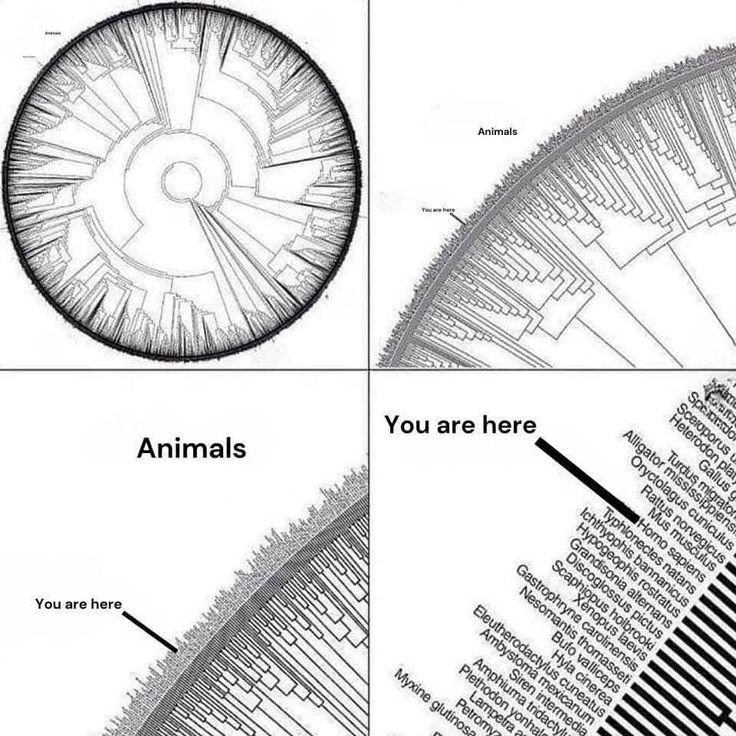
Evolution is one of humanity’s greatest discoveries, explaining how all the diversity of life on Earth arose. Despite more than 160 years since the publication of Charles Darwin’s “On the Origin of Species,” this theory continues to evolve and be refined, relying on new data from genetics, molecular biology, and paleontology.
What is Evolution?
In its simplest definition, evolution is the change in allele frequencies in populations under the influence of natural selection, mutations, genetic drift, and migration. It is the process by which living organisms change from generation to generation, adapting to environmental conditions.
It is important to understand that evolution is not merely a “theory” in the colloquial sense of the word. In science, a theory represents a well-substantiated model, supported by a multitude of independent evidence, much like the theory of gravity or atomic theory.
Fundamental Principles of Evolution
The modern theory of evolution is based on four basic postulates, formulated by Darwin and Wallace:
1. Heredity
Traits are passed from parents to offspring through DNA molecules. Each organism receives genetic material from its ancestors, ensuring similarity between generations. The mechanism of heredity was discovered long after Darwin’s work, but it explains how beneficial changes can become fixed in populations.
2. Variation
Offspring are not exact copies of their parents. Variation arises through two main mechanisms:
- Mutations — random changes in DNA, which can be point mutations (substitution of a single nucleotide) or affect entire chromosomes. Most mutations are neutral or harmful, but sometimes they give an organism an advantage.
- Recombination — the shuffling of genetic material during sexual reproduction, particularly in the process of crossing-over during meiosis. This creates new combinations of genes in the offspring.
3. Natural Selection
Individuals with more beneficial traits have a greater chance of surviving and leaving offspring. This is called differential reproductive advantage. It is important to understand that “survival” in the evolutionary sense means not just living to an old age, but successfully passing one’s genes to the next generation.
4. Struggle for Existence
Resources in nature are limited, leading to competition between organisms. This “struggle” does not necessarily represent direct aggression—it can be competition for food, territory, mating partners, or simply the ability to better withstand unfavorable conditions.
Genetic Basis of Evolution
Modern population genetics provides the mathematical framework for describing evolutionary processes. The central concept is allele frequency—the proportion of a specific gene variant in a population.
Hardy-Weinberg Principle
In an ideal population (without mutations, selection, migration, and with random mating), allele frequencies remain constant from generation to generation. This is described by the equation:
p² + 2pq + q² = 1
where p and q are the frequencies of two alleles, p² and q² are the frequencies of homozygotes, and 2pq is the frequency of heterozygotes.
Disruptions of Equilibrium
In reality, the Hardy-Weinberg equilibrium is constantly disrupted:
- Genetic drift has a particularly strong effect on small populations, where random events can drastically change allele frequencies regardless of their usefulness.
- Gene flow occurs when individuals migrate between populations, which can lead to the equalization of allele frequencies or, conversely, to the appearance of new variants.
- Directional selection systematically changes allele frequencies in favor of more adaptive variants.
Types of Evolutionary Change
Microevolution
These are changes within a single species, usually affecting allele frequencies in populations. A classic example is the development of pesticide resistance in insects. When a population is exposed to a pesticide, individuals with mutations that provide resistance gain a huge advantage and quickly spread through the population.
Macroevolution
Large-scale evolutionary changes leading to speciation and the emergence of new taxonomic groups. An example is the divergence of the chimpanzee (Pan) and human (Homo) lineages about 6-7 million years ago.
Speciation can occur through various mechanisms:
- Allopatric speciation arises from the geographical isolation of populations. Isolated groups accumulate differences until they become reproductively incompatible.
- Sympatric speciation occurs without geographical isolation, often through polyploidy in plants or ecological specialization.
Mechanisms of Selection
Individual Selection
The classic Darwinian mechanism, where individuals with the most adaptive traits are selected. Mathematically, the change in allele frequency can be described as:
Δp = p(1−p) × s
where p is the allele frequency, and s is the coefficient of selection, showing the advantage in survivability.
Sexual Selection
Darwin identified this mechanism separately because it can lead to the development of traits that reduce survival but increase reproductive success. Sexual selection works through two mechanisms:
- Competition for a mate leads to the development of weapons (deer antlers) or an increase in body size for physical dominance.
- Mate choice explains the development of bright ornaments, complex songs, and demonstrative behavior. The “good genes” hypothesis suggests that females choose males with “costly” traits because only healthy individuals can afford them.
Group Selection
The most controversial mechanism, where selection acts at the group level, not the individual level. Although group selection can explain some forms of altruistic behavior, it requires very specific conditions and is now considered less significant than other explanations.
The Gene’s-Eye View: “The Selfish Gene”
In 1976, Richard Dawkins, in his book “The Selfish Gene,” proposed a powerful shift in perspective: what if the primary unit of selection is not the species, not the group, and not even the individual, but the gene?
From this viewpoint, organisms are merely “survival machines” created by genes for their own replication. Genes that build more successful machines are copied in greater numbers and continue to exist. The term “selfish” is a metaphor, meaning that natural selection will favor those genes that ensure their own survival and replication, often at the expense of competing alleles.
This approach elegantly explains many complex phenomena, especially altruism, which seems paradoxical from the standpoint of individual selection.
How can a “selfish” gene give rise to altruism?
- Kin Selection: A gene that causes an individual to help its relatives is actually helping its own copies, which are highly likely to be present in those relatives. For example, a gene that causes a bird to risk itself by giving a warning call at the sight of a predator may perish with the bird, but save several of its siblings, each of whom carries a copy of that same gene with a 50% probability. In the end, there will be more copies of the “altruism gene” in the next generation. This is mathematically described by Hamilton’s rule: rB > C, where r is the coefficient of relatedness, B is the benefit to the recipient, and C is the cost to the altruist.
- Reframing Selection: Sexual selection from this perspective is simply a strategy of genes that cause females to choose carriers of other genes (e.g., those responsible for a peacock’s bright tail), which signal the “good quality” of the entire survival machine.
Thus, the concept of the selfish gene does not refute Darwinism but provides it with a more universal foundation. It asserts that all levels of selection (individual, sexual, and even apparent group selection) are ultimately a manifestation of competition between genes for representation in the gene pool of the future.
Evidence for Evolution
Paleontological Evidence
Fossil remains provide direct evidence of evolutionary changes over time. Transitional forms are especially important:
- Archaeopteryx demonstrates the transition from reptiles to birds, combining features of both groups.
- Tiktaalik shows how fish were conquering land, having both gills and primitive limbs.
- The series of fossil whales documents the transition from land mammals to fully aquatic ones.
Morphological Evidence
- Homologous organs — structures with a common evolutionary origin but different functions. The forelimb of a bat, the paw of a dog, and the hand of a human have the same basic structure.
- Vestigial organs — remnants of structures that have lost their original function. The human coccyx is a remnant of the tail of our ancestors.
Molecular Evidence
DNA provides the most compelling evidence for evolution:
- HOX genes, which control the development of the body plan, are found in all animals from flies to humans.
- Pseudogenes — “broken” genes that no longer function. For example, the GULO gene, necessary for vitamin C synthesis, is present in primates but does not work due to mutations.
- Molecular clocks allow estimation of the time of species divergence based on the accumulation of mutations in DNA.
Biogeographical Evidence
The distribution of species across the planet reflects their evolutionary history. The endemic species of the Galapagos Islands, including Darwin’s famous finches, evolved from mainland ancestors in isolation.
Experimental Evidence
Evolution can be observed in real-time:
- Lenski’s experiment with E. coli has been ongoing for over 30 years and has shown numerous evolutionary adaptations.
- Antibiotic resistance in bacteria is evolution in action, observed by doctors daily.
Mathematical Models of Evolution
Price Equation
This fundamental equation describes the change of any trait in a population:
Δz = Cov(w, z) + E(wΔz)
where Δz is the change in the mean value of the trait, w is the fitness of individuals, z is the trait value, Cov is covariance, and E is the expected value.
Fisher’s Fundamental Theorem
The rate of increase in the fitness of a population is proportional to the additive genetic variance in fitness. Simply put, the more useful genetic variation in a population, the faster it can adapt.
Modern Synthesis
In the 1930s-1950s, the Darwinian theory of natural selection was unified with Mendelian genetics and the new population genetics. This “Modern Synthesis” laid the foundation for modern evolutionary biology, combining the work of Fisher, Wright, Haldane, and other scientists.
Common Misconceptions
”Evolution means progress”
This is incorrect. Evolution has no goal and does not strive for “perfection.” Existing organisms are not “higher” or “lower” than their ancestors—they are simply differently adapted to their ecological niches.
”It’s just a theory”
In science, the word “theory” has a completely different meaning. A scientific theory is a well-substantiated explanation of natural phenomena, supported by a multitude of independent evidence.
”There are no transitional forms”
In fact, thousands of transitional forms are known. In a sense, all organisms are transitional forms between their ancestors and descendants.
”Evolution is entirely random”
Mutations are indeed random, but natural selection is a directional process. It consistently selects beneficial changes and rejects harmful ones, leading to the accumulation of adaptive traits.
Modern Directions
Evolutionary biology continues to develop. Epigenetics shows how changes in gene expression can be inherited without changing the DNA sequence. Kimura’s neutral theory explains the role of random processes in evolution. Evo-devo (evolutionary developmental biology) explores how changes in developmental genes lead to evolutionary innovations.
Conclusion
The theory of evolution unites all of biology, providing a single conceptual framework for understanding life on Earth. As the eminent biologist Theodosius Dobzhansky said: “Nothing in biology makes sense except in the light of evolution.”
Related Topics