Behaviorism
On the most scientifically appropriate areas in psychology.
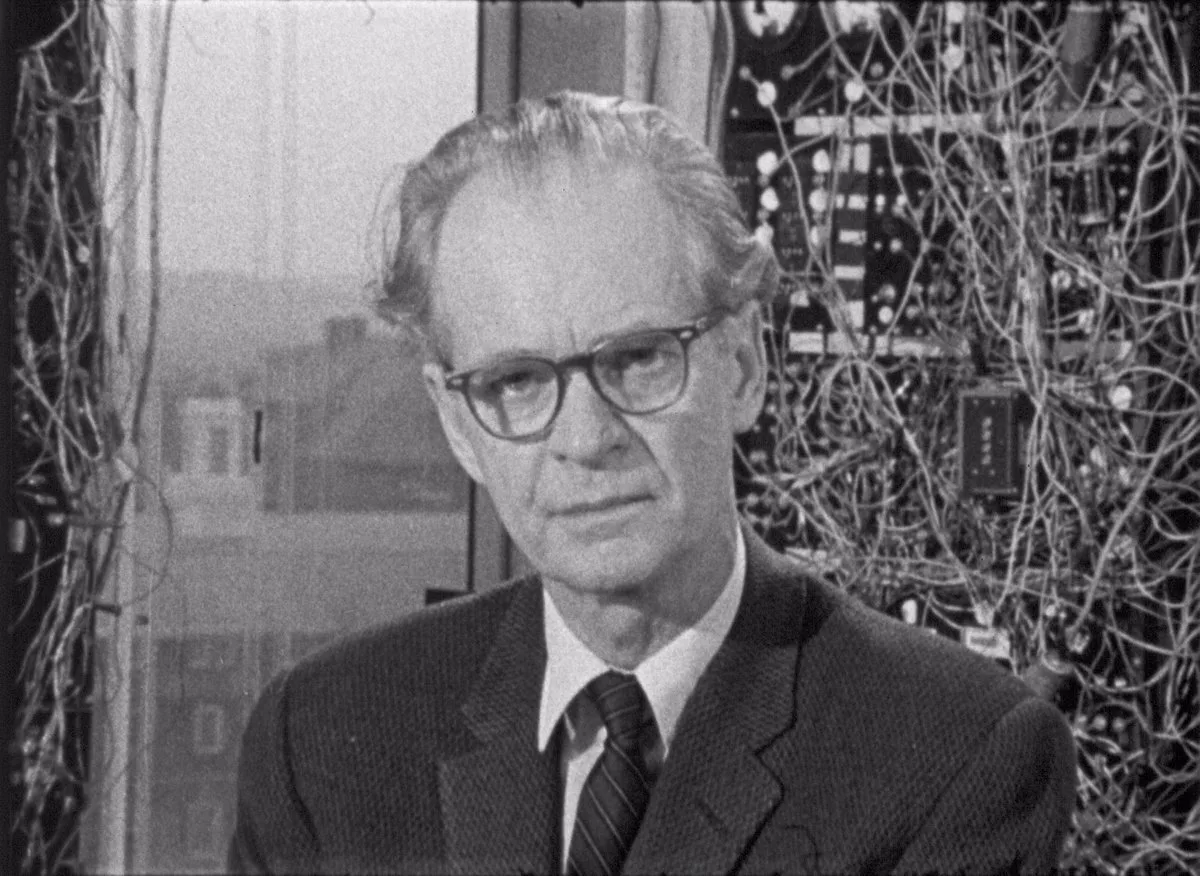
Note: Behaviorism has long ceased to be considered a separate, fully-fledged scientific field in psychology, and is now only used in certain areas. The author does NOT suggest that human behavior should be considered “in a vacuum,” guided solely by behaviorism. This article merely offers an introduction to the field.
Behaviorism: A Scientific Revolution in Understanding Human Behavior
Introduction: From Mystification to Science
In the history of human thought, genuine conceptual revolutions are rare. One such revolution was behaviorism, a branch of psychology that offered a radically new view of the nature of human behavior. While for centuries people explained their actions through the prism of the “soul,” “will,” and other internal entities, behaviorism proposed looking at behavior as the result of the interaction of the organism with the environment.
The revolutionary nature of this approach was particularly evident in the works of B.F. Skinner. Skinner did not simply propose a new psychological theory — he declared the need to create a “technology of behavior” capable of solving the global problems of humanity.
Historical development: from reflexes to operant behavior
The origins of behaviorist thinking can be traced back to the works of Descartes and his mechanistic views. The real breakthrough came thanks to the work of Ivan Pavlov, who showed that it is possible to purposefully form new behavioral responses (conditioned reflexes) by linking neutral stimuli with biologically significant ones. The “stimulus-response” model was born.
A real revolution occurred in the 20th century with the development of the concept of operant behavior. Skinner showed that behavior is determined not only by preceding stimuli, but also, more importantly, by its consequences. The organism does not simply react to the environment — it actively influences it, and the environment “responds” with reinforcement or punishment. This model explained how complex behavioral chains are formed and how desired behavior can be purposefully shaped.
Basic principles of behaviorism
-
Rejection of mentalism. The central principle is the rejection of explaining behavior through internal mental entities (thoughts, feelings, intentions). To say that a person hit another “out of anger” is to explain nothing. Behaviorism looks for the causes of behavior in external, observable factors.
-
Determinism of behavior. Behavior is subject to strict laws and is determined by environmental factors and the history of reinforcement of the organism.
-
Operationalism and observability. Psychology should study only what can be objectively observed and measured.
Behavioral technologies
Skinner box
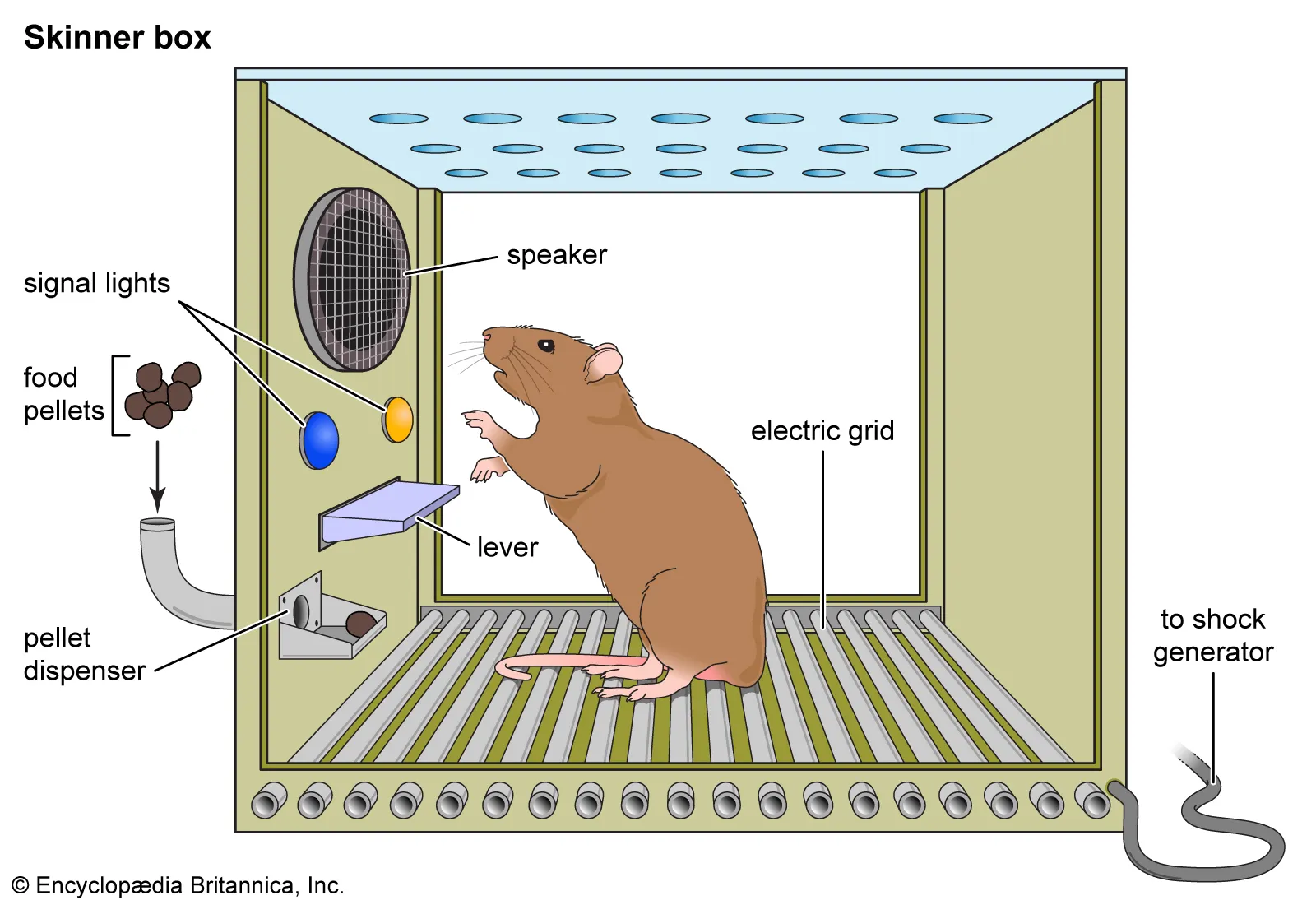
A Skinner box is a closed chamber with a lever or button, an automatic food delivery mechanism, and a behavior recording system. The animal accidentally presses the lever, receives a reward, and gradually understands the cause-and-effect relationship. Skinner called this process operant conditioning — learning through the consequences of one’s own actions.
Genius pigeons
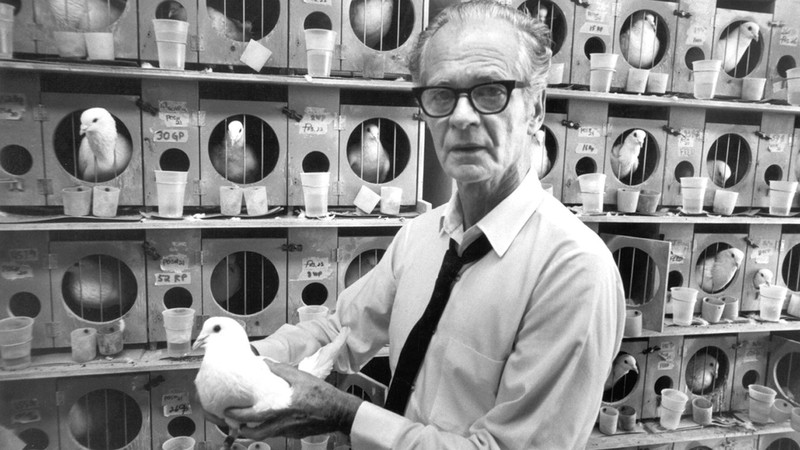
The most impressive experiments were those with pigeons. Skinner discovered that these birds are capable of amazing things:
Superstitious behavior: When food was given at regular intervals regardless of the pigeon’s actions, the birds began to repeat random movements, believing that they were the ones “causing” the food to appear. Some pigeons spun around, others nodded their heads, and still others raised their wings.
Artistic taste: Pigeons were taught to distinguish between paintings by Picasso and Monet, as well as to evaluate the quality of children’s drawings. The birds successfully identified the artists’ styles and even transferred their knowledge to new works.
Sports skills: In one experiment, pigeons mastered a game similar to bowling, knocking down pins with remarkable accuracy.
Military secret
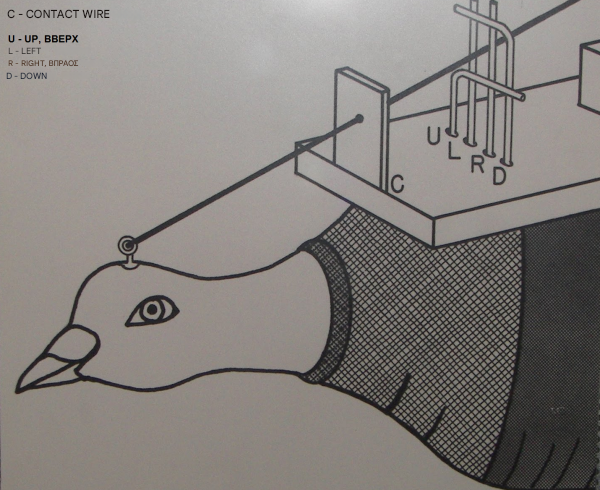
During World War II, Skinner worked on a secret project called “Pigeon” — a missile guidance system using trained birds. The pigeons were supposed to sit in the nose of the missile and peck at the image of the target on the screen, correcting the flight path. The project proved effective but was shut down in favor of electronic systems.
Behavioral mechanisms: reinforcement as a basis
Skinner identified two main types of reinforcement:
Positive reinforcement occurs when behavior is followed by a pleasant stimulus (e.g., candy for a good grade).
Negative reinforcement is the reinforcement of behavior through the removal of an unpleasant stimulus (e.g., taking a pill for a headache).
The reinforcement schedule (constant, fixed or variable interval/ratio) is of particular importance. It is variable ratio schedules (as in slot machines) that create the most stable and addictive behavior. Complex skills are formed through a process called “shaping” — the gradual reinforcement of increasingly accurate approximations to the desired result.
Moreover, these behavioral mechanisms are at the very core of evolution. From this point of view, positive reinforcement is survival and reproduction in a favorable habitat (rich in food, safe). Species whose behavior led them to such conditions received reinforcement in the form of surviving offspring. At the same time, the habitat of predators or harsh climatic conditions act as a powerful stimulus for negative reinforcement, reinforcing any behavior that helps to avoid these dangers. Thus, evolutionary selection can be viewed as a global process of operant conditioning on a species scale.
Rethinking freedom and responsibility
One of the most radical conclusions of behaviorism was the assertion that “autonomous personality” and “free will” are illusions. What we consider to be our free choice is actually the result of a complex interaction between genetics and a unique history of reinforcement.
In this worldview, freedom is not an internal property, but a state in which a person is not subject to coercion or punishment. Responsibility is not a metaphysical quality, but a social tool used to modify the behavior of others.
The collapse of radical behaviorism and the cognitive revolution
Despite its success in explaining the mechanisms of learning, radical behaviorism faced criticism that led to its decline as the dominant theory in the mid-20th century and the beginning of the cognitive revolution. The problem was not that the principles of reinforcement were incorrect, but that they could not explain the full complexity of the human mind.
The “black box” problem
The main criticism of behaviorism was its fundamental refusal to look inside the “black box” — that is, to study internal mental (cognitive) processes such as thinking, memory, planning, and imagination. Skinner considered them unobservable and therefore unscientific. However, critics argued that by ignoring cognitive processes, behaviorism was unable to explain many key aspects of human behavior.
Language as the Achilles’ heel of behaviorism
Linguist Noam Chomsky dealt a crushing blow to behaviorism in his 1959 review of Skinner’s book Verbal Behavior. He convincingly demonstrated that the speed and creativity with which children learn language cannot be explained by the slow process of reinforcement.
Phenomena that behaviorism could not explain
In addition to language, other experimental data has accumulated that contradicts strict behaviorist doctrine:
-
Latent learning. Edward Tolman’s experiments with rats in mazes showed that animals formed “cognitive maps” (mental representations) of the maze even without reinforcement.
-
Learning through observation. Albert Bandura, in his experiments with the Bobo doll, showed that children can learn behavior simply by observing adults, without direct reinforcement.
As a result of these and other discoveries, the focus in psychology shifted from the study of pure behavior to the study of internal information processing, which became the essence of the cognitive revolution.
Application of behaviorist principles
Despite its theoretical limitations, the practical usefulness of behaviorism is undeniable in many areas.
-
Training and working with animals. This is perhaps the purest and most successful area of application of behaviorism. Since we cannot discuss animals’ “thoughts and feelings” with them, working with their behavior through reinforcement is the primary method. Cynology, circus training, service dog training, and service animal training are all based on operant conditioning principles such as positive reinforcement (treats, praise) and shaping.
-
Education and upbringing. Programmed learning, immediate feedback systems, and token economies in classrooms are all direct legacies of behaviorism.
-
Clinical practice. In psychotherapy, behaviorist methods have proven highly effective in treating phobias (systematic desensitization), addictions, and behavioral disorders.
-
Organizational behavior. Reward systems, achievement recognition programs, and other methods of motivating personnel in business widely use the principles of reinforcement.
Current state and development of ideas
Today, radical behaviorism is not considered a comprehensive theory of psychology. However, its legacy is enormous.
-
Cognitive-behavioral synthesis. The principles of behaviorism have been successfully integrated with the cognitive approach. Cognitive-behavioral therapy (CBT) — one of the most effective and scientifically sound methods of psychotherapy — works simultaneously with behavior (external factors) and thoughts (internal cognitions).
-
Applied behavior analysis (ABA therapy). Operant conditioning methods remain the gold standard in working with children with autism spectrum disorders and other developmental disorders.
-
Neuroscientific evidence. Modern neuroscience has confirmed many of the ideas of behaviorists at the biological level. The “reinforcement system” in the brain, associated with the neurotransmitter dopamine, is the neurochemical basis for the processes described by Skinner.
Conclusion: legacy and prospects
Behaviorism revolutionized psychology by purging it of unscientific speculation and laying the foundations for the study of behavior as an objective phenomenon. Although its radical form proved too limited to explain the full complexity of the human psyche, its key principles—reinforcement, behavior shaping, and functional analysis—have become an integral part of modern science.
The main lesson of behaviorism is not to deny the inner world, but to recognize that our behavior is largely shaped by the environment. And this environment, unlike the hypothetical “soul,” can be studied and changed for the benefit of humans. This is the enduring value and practical power of the behaviorist approach.
Related Topics


Theory of evolution
A comprehensive guide to the mechanisms and evidence of evolutionary theory.
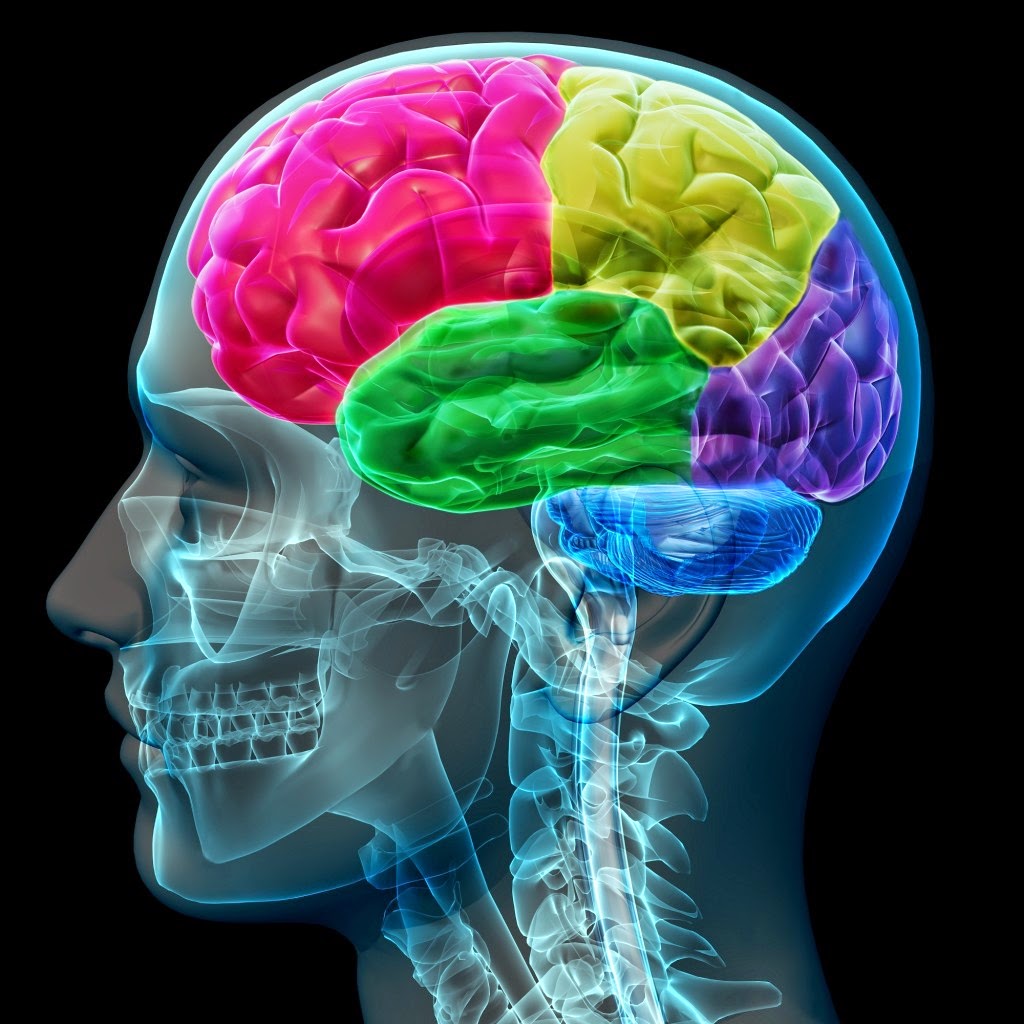
What is the brain and how do you use it?
About the processes that occur in the brain during thinking and learning, how our actions influence its development, how to control it, etc.


Why You Shouldn't Be Indifferent to Strangers?
Why indifference to others' thinking destroys civilization: the truth about how your beliefs affect the entire world.